Encinitas commissioners continue Ocean Bluff 27‑home subdivision after hours of public comment and technical review
Loading...
Summary
After a full hearing with extensive public comment, the Planning Commission continued the Ocean Bluff residential subdivision (27 single‑family homes) to allow the applicant to refine grading, neighborhood protections, biological mitigation, and traffic clarifications; commissioners emphasized outreach to adjacent neighbors and clearer enforceable mitigation language.
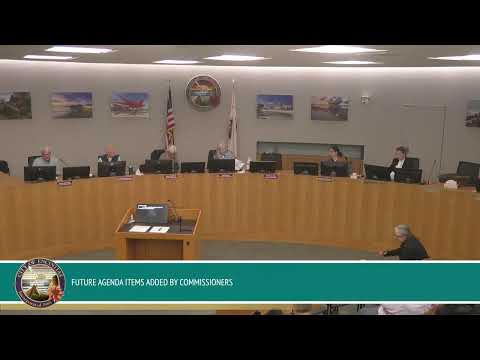
The Encinitas Planning Commission on Nov. 20, 2025, continued the public hearing on Rincon Homes’ Ocean Bluff residential subdivision after more than four hours of staff presentations, applicant testimony and public comment.
Project and legal context: Senior Planner Esteban Dana summarized the application to subdivide a 7.2‑acre coastal parcel at 501 Ocean Bluff Way into 27 lots using state density‑bonus law. The proposal calls for 24 market‑rate single‑family homes and three very‑low‑income for‑sale units, about 2.7 acres preserved in an open‑space easement, two biofiltration basins, a private road and multiple waivers granted under density‑bonus provisions. Staff noted the project was analyzed in an Environmental Impact Report and that the city’s technical review found mitigation measures for air quality, biology, noise and hydrology. Dana also reiterated the applicability of California Government Code §65589.5 (state density bonus) and the narrow legal grounds for disapproving a compliant density‑bonus housing development.
Public concerns: Eleven members of the public spoke during the comment period. Neighbors repeatedly raised traffic safety concerns on narrow local streets (Requesa, Westlake, Quail Gardens) and argued existing morning/afternoon school traffic and pedestrian patterns were not fully captured by standard trip counts; speakers urged additional traffic mitigation. Several neighbors described mature trees along adjacent property lines and alleged developer outreach was inadequate; one speaker presented before‑and‑after images and said retaining walls and grade increases of up to 10 feet would materially and negatively affect an elderly adjacent homeowner’s privacy and property value.
Technical questions and staff responses: Commissioners pursued detailed follow‑ups with staff and consultants about drainage and stormwater management (the project’s two biofiltration basins, orifice control and emergency overflow routing into the city storm system and Cottonwood Creek), grading and final pad elevations (some lots require fill exceeding 4 feet and retaining walls), and sewer capacity (a cumulative sewer study and any necessary infrastructure upgrades are required prior to building permits). Traffic consultants explained trip generation used SANDAG/ITE guidance (one single‑family home ≈10 ADT) and a project contribution of about 270 ADT; the city’s traffic mitigation fee is roughly $3,000 per dwelling unit. Biologists described protocol surveys for the California gnatcatcher and noted follow‑up monitoring and post‑construction measures; City consultants and the applicant agreed mitigation language would be clarified to address California Department of Fish and Wildlife comments, including an added preconstruction survey requirement for newly listed species (crotch bumblebee) and construction‑period monitoring.
Affordable units and design concerns: Several commissioners and neighbors questioned whether the proposed very‑low‑income for‑sale units were comparable in livability and amenity to market‑rate units (the transcript records concerns over 5‑bedroom affordable units with smaller lots and limited backyards). Staff and the applicant said state law requires bedroom parity and quality of workmanship and that the applicant’s proposals meet state and city standards; commissioners requested additional assurances and asked that the design review conditions be tightened (staff incorporated requirements for additional architectural articulation on specific frontage lots).
Outcome and next steps: After extended deliberation the commission agreed to continue the item so the applicant could reengage directly with affected neighbors (the Fransen family was repeatedly mentioned) and return with clarified mitigation language for biology, more explicit plans for retaining walls and grade transitions, and any updated traffic or sewer analyses. The motion to continue carried 3‑1. Commissioners also discussed whether prior citizen participation program meetings should count toward hearing limits under state law; city counsel advised the issue lacked settled case law and recommended a conservative approach in scheduling and noticing.
What’s next: Staff and the applicant will provide revised materials and documented outreach results for the commission’s December 4 meeting; staff flagged specific follow‑up tasks including clarified MMRP language addressing CDFW comments, a sewer study prior to building permits, and documentation of meetings with adjacent property owners.