
Appeals panel considers whether prosecutor’s closing crossed the line in Farris rape convictions
Get AI-powered insights, summaries, and transcripts
Subscribe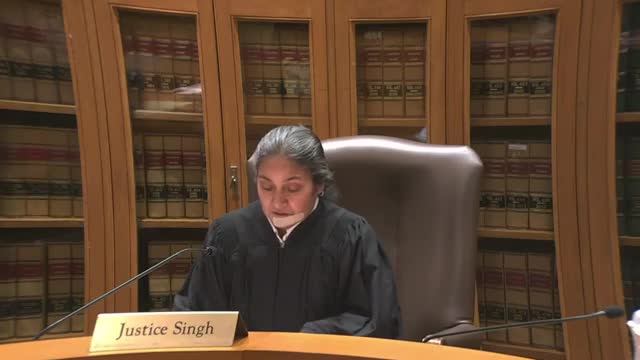
Summary
At oral argument, defense counsel said the Commonwealth's closing argument improperly appealed to sympathy and shifted the burden in a close child-sex-abuse case; prosecutors said many objections were not preserved and that the disputed remarks were tied to evidence and the victim’s age and demeanor.
An appellate panel on Dec. 2 heard arguments over whether closing remarks by prosecutors in the case of Barry Lee Farris exceeded permissible bounds and led to an unfair trial.
Jennifer Peterson, counsel for defendant-appellant Barry Lee Farris, told Justices Sabita Singh, Margaret Grant and Gloria Tan that the case turned on witness credibility and that the Commonwealth’s closing argument impermissibly appealed to jurors’ sympathy and shifted the burden of proof. "In this case, they did," Peterson said of the Commonwealth’s closing, arguing that the trial court’s curative instruction could not undo prejudice in a close case.
Peterson pointed to trial evidence she said undermined the prosecutor’s lines of argument: several counts were dismissed or directed out, the complainant’s forensic exam took place about six hours after the alleged incidents and showed no abrasions or scarring, and there was no DNA around the genitals despite saliva and seminal fluid on the lower abdomen. She also argued that DCF records and a pending motion in limine (not included in the appendix) showed prior allegations that, if considered, would make certain rhetorical questions by the prosecutor improper.
"This was a close case that turned on the credibility of the parties," Peterson said, noting medical testimony that hymenal healing could take days and contesting the prosecutor’s analogy that repeated abuse would lead the body to become "accustomed" in the way a guitar player’s fingertips develop calluses.
Hallie White Spate, assistant district attorney for Middlesex, answered that many of the objections were not preserved for appeal and that, where the record shows a narrow set of preserved objections, review must be for a substantial risk of miscarriage of justice. "There was testimony that these tissues are meant to stretch and bounce back," White Spate said, tying the prosecutor’s argument to medical evidence and to the victim’s age and subsequent testimony. She urged the court to affirm the judgments.
The justices questioned both sides on specific points: which closing-argument remarks were objected to at trial; whether DCF records and a motion in limine were in the appendix; and how jurors could reasonably assess DNA-transfer hypotheses raised at trial. Defense counsel stressed that some allegedly prejudicial arguments occurred in closing, when there was no remedy available, and that jurors may lack the specialized life experience to assess DNA transference the prosecutor invoked.
The panel recessed without immediate decision. The matter was submitted for decision after both sides rested on their briefs.