
City Council approves $300,000 CPA award to restore fire‑damaged 37 George Street after lengthy debate
Get AI-powered insights, summaries, and transcripts
Subscribe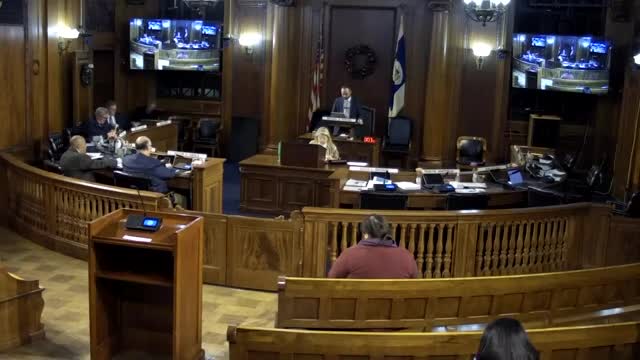
Summary
The Springfield City Council approved a $300,000 off‑cycle Community Preservation Act grant to repair the exterior of a fire‑damaged Victorian at 37 George Street, after extended discussion about insurance, contractor safeguards and equitable access to CPA funds.
The Springfield City Council unanimously approved a $300,000 Community Preservation Act (CPA) award on Dec. 1 to repair the exterior of a fire‑damaged home at 37 George Street in the Maple Hill Local Historic District.
Bob McCarroll, chair of the CPA committee, told the council the house is a significant historic property that suffered severe fire damage earlier this year and that the committee recommends $300,000 to restore the exterior — roof, cladding and windows — so the public‑facing historic resource can be preserved.
Owners Paula Martinelli and Fabio Rosales, represented at the meeting, said they bought the property out of foreclosure and have been working to stabilize it; they and the selected contractor, Candido Osorio of Sapphire Construction, described contingency plans to secure the structure before winter and carry contractor liability insurance during construction.
Several councilors pressed for detail on insurance and disbursement. Councilor Davila and others asked whether the owner held homeowners insurance at the time of the fire; CPA officials confirmed the property was uninsured when the fire occurred. McCarroll and CPA staff explained that CPA reimburses contractors after inspected work is completed, that contracts require contractor and homeowner insurance (including builders’/contractor policies during construction), and that no private party receives funds up front.
Councilor Whitfield and others raised fairness and precedent concerns: they asked whether other homeowners had comparable access to off‑cycle CPA monies and whether the committee had publicized these off‑cycle opportunities. CPA staff said off‑cycle requests are considered for emergencies or market opportunities and that the committee does not maintain a standing “emergency fund.”
The contractors and CPA staff said work would be phased, inspected and reimbursed only after verification; the CPA contract will require appropriate insurance and licensed contractors. Councilor Kern asked about assessment and prior CPA awards for reference; CPA staff and councilors discussed limits per cycle and the committee’s policy of not recommending more than $300,000 for a single project in one funding cycle.
After extended discussion about risk, insurance requirements and the public value of preserving a large Victorian home, the council voted to approve the CPA award. The motion passed with recorded no votes from three councilors and the remainder voting yes. The CPA contract will include insurance and phased reimbursement terms; homeowners and contractor said their intent is to make the property insurable again and to return to occupancy.
The council’s approval covers only exterior historic rehabilitation under CPA rules; interior repairs were described as additional costs to be financed separately. Next steps include contract finalization, phased inspections and subsequent disbursements as work is completed.