Get Full Government Meeting Transcripts, Videos, & Alerts Forever!
Get email alerts on the Permitting And Unsafe Building topic
No spam. Unsubscribe anytime.
Council committee advances ordinance changes to permitting and unsafe-building procedures
Summary
The committee approved multiple code amendments to align with new state law on private providers for plan review/inspection and to adjust local unsafe-building procedures, including expanded hearing timelines and automatic lien waivers when properties come into compliance.
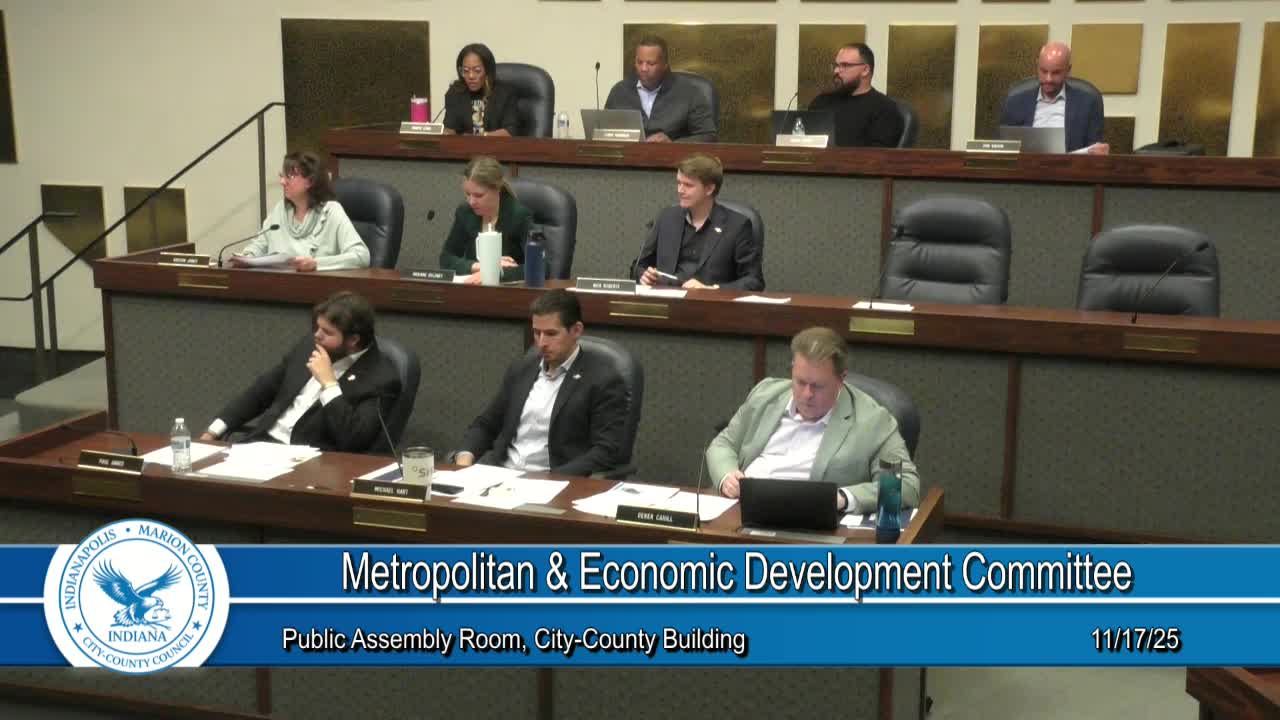
Abby Brands, director of the Department of Business and Neighborhood Services, presented a package of ordinance changes the committee approved Nov. 17 to align the city's code with recent state statutory changes and to refine unsafe-building procedures.
Brands said many amendments respond to state changes (citing House Bill 1005) that allow private-party plan review and inspections for Class 2 residential projects. Her presentation covered revised definitions; limits on who may open permits (owner, employee of owner, or licensed general contractor) to close a perceived loophole for house-flipping entities; new timelines and completeness-check requirements for permit applications; a new combined "one-stop" permit type to package ILP, structural and craft permits; updated completion-card types for private-provider workflows; inspection scheduling and reporting adjustments; and owner-requested inspections with limited reinspection fees.
On unsafe-building rules, Brands said the ordinance expands the time a property owner may request a hearing from 10 to 90 days after a repair-order notice, permits hearings after penalties have been assessed, and codifies the department—s ability to waive liens and refund assessed penalties automatically when a property comes into compliance during the life of a case. Brands said automatic waivers are intended to incentivize owners to bring properties into compliance within the two-year repair-order period.
Councilors asked clarifying questions about how combined permits interact with stop-work orders and how automated notifications to applicants operate; Brands said the private-provider package was intended to speed permitting and that the city has scripted automatic email notifications for some permit types. The committee approved the ordinance package by voice vote.
Next steps: the ordinance changes take effect as required by statute and local code-adoption procedures; the department will provide specific operational timing and scripted notification intervals upon request.