Texas Supreme Court weighs whether a parenthetical creates a fixed 1 1/28 royalty in Clifton v. Johnson
Loading...
Summary
At oral argument in Clifton v. Johnson, the Texas Supreme Court heard competing views about whether a deed’s parenthetical calculation establishes a fixed 1 1/28 royalty interest or instead reflects a floating royalty tied to the 1/8 presumption. Counsel disputed whether the Van Dyke "presumed grant" doctrine applies and whether remand is needed for additional factual development.
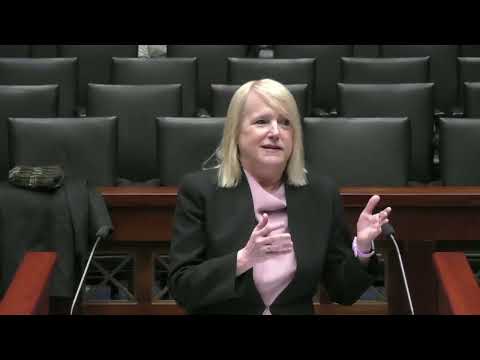
The Texas Supreme Court on Tuesday heard oral argument in Clifton v. Johnson, a dispute over whether a deed’s parenthetical calculation establishes a fixed 1 1/28 royalty interest or should be read as a floating fraction informed by the court’s Van Dyke "presumed grant" presumption.
Petitioners’ counsel told the court the instrument is clear on its face. "The unambiguous royalty deed in this case uses language this court has never had the opportunity to construe before," counsel said, arguing the parenthetical merely explains the arithmetic and the deed repeatedly references a royalty interest. Counsel pointed to the deed’s repeated use of "royalty," including a warranty clause, and the long, undisputed course of payments over decades as evidence that the parties and successors treated the interest as a fixed 1 1/28 royalty.
Respondents’ counsel described the record as "murky" and urged caution, arguing threshold and application questions remain: whether the Van Dyke presumption applies to the kind of royalty-language at issue, whether the presumption was preserved below, and whether the case should be remanded for factual development about the parties’ historical conduct. Counsel said course-of-performance evidence might decide or at least inform the matter if the court sends the case back to the trial court.
During extended questioning, justices pressed both sides on several points: how to reconcile the deed’s four-corners text with decades of payment practices that sometimes used royalty rates different than 1/8; whether a single fractional statement plus a parenthetical is best read as a fixed fraction or as a descriptive arithmetic clarification; and whether remanding for evidence on course of conduct is required when the lower court resolved parts of the case on summary judgment.
Counsel for the petitioner emphasized that even if Van Dyke’s presumption is available, the deed’s wording and the historical record rebut it and allow the court to resolve the dispute now. Respondents warned that a determination that the presumption applies broadly or that course-of-performance can substitute for text could upend long-settled title expectations unless the record is developed.
No formal decision was announced. After brief rebuttal remarks from petitioners’ counsel reiterating that the parenthetical explains the math and that the historical practice supports a fixed 1 1/28 royalty, the court submitted the case and took a recess. The justices will issue an opinion at a later date.
Background: Clifton v. Johnson arises from competing interpretations of a royalty deed that describes a fractional royalty and includes a parenthetical calculation (described repeatedly in argument as "1 1/28" and as "1/16 of the usual 1/8" in the deed). The arguments engaged a line of Texas precedents discussed at length on the bench, including Van Dyke and cases the parties cited as analogues and contrasts.