
Salinas reports $1.7 million in first year rental program receipts; staff to return excess fees, cites 45% compliance
Get AI-powered insights, summaries, and transcripts
Subscribe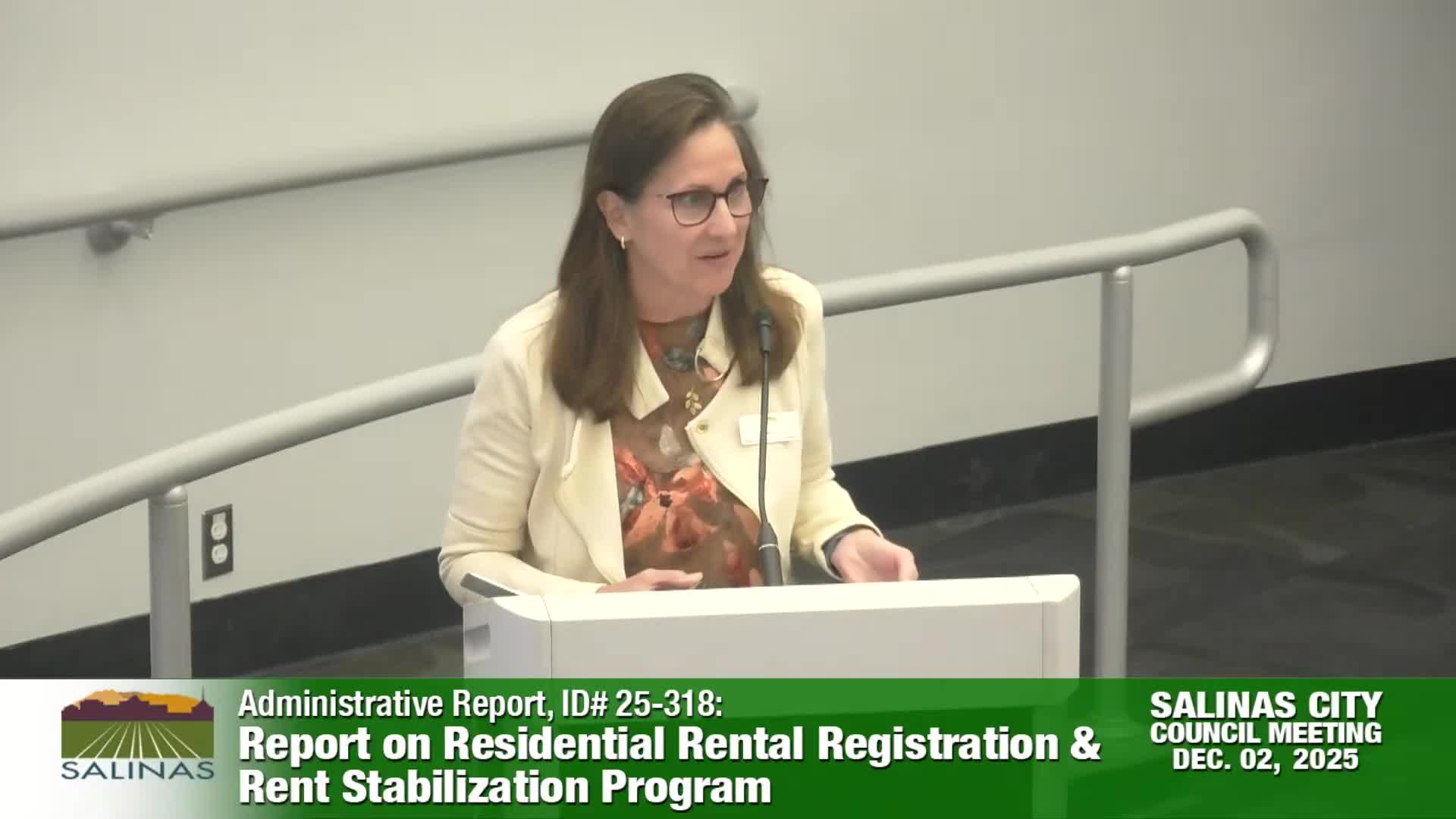
Summary
City staff reported roughly $1.7 million collected through Salinas’ 2025 rental registration and rent stabilization programs, with projected year‑end revenue of about $1.715 million and estimated excess after expenses to be returned proportionally to registrants. Staff noted 45% landlord registration and five tenant petitions to date.
Director Brenton told the City Council that Salinas registered slightly more than 12,000 rental units under the city’s two new programs and collected about $1.675 million through Sept. 30, with an additional $35,000 in late fees. Staff projected year‑end revenue of approximately $1,715,000 and estimated total program expenditures of about $803,632, leaving a projected excess of roughly $911,715 that the ordinance requires be proportionally returned to registrants.
Brenton said the rental‑registration fee was $45 per unit and the rent‑stabilization fee $170 per unit. She reported that about 45% of estimated rental units have registered so far and that the program has received five tenant petitions and seven landlord petitions, with two tenant petitions withdrawn after voluntary resolution.
City Attorney staff clarified that late fees are penalties assessed for noncompliance and are not treated the same as the ordinary fee revenue that is subject to proportional refund. “Late fees are a penalty for not complying with the ordinance,” the city attorney said, explaining late fees will be recorded in the year they are collected and treated separately from the fee refund calculations.
Councilmembers asked detailed implementation questions: how late‑fee revenue will be attributed to a calendar year, whether late payments collected in the next year would be counted toward prior‑year refunds (staff said refunds are based on actual revenue collected within the closed year), and how the city will handle refunds once year‑end audit and reconciliation are complete. Brenton said staff will return to council in early 2026 with final audited program numbers and a recommended methodology for calculating and distributing refunds.
Council members also pressed staff on staffing, customer service capacity and transparency. Staff said the initial staffing model for the program settled on three full‑time positions for startup operations, with the EPS study indicating up to five positions over time if registration rates climb above 80%.
On public access and enforcement, staff said the current registration platform (Tolumie) is secure and not public‑facing; the council may direct staff to explore public dashboards that would show property locations and registration status. Staff also committed to improving outreach, continuing collaborations with community groups and presenting a housing dashboard on Dec. 9.
The council did not take formal action on the report; it was received for information with follow‑up requests for audited year‑end figures, breakdowns of tenant and landlord petitions, and staffing and outreach plans.