
Senate committee hears strong support for Karen L. Watson’s nomination as Guam National Guard adjutant general
Get AI-powered insights, summaries, and transcripts
Subscribe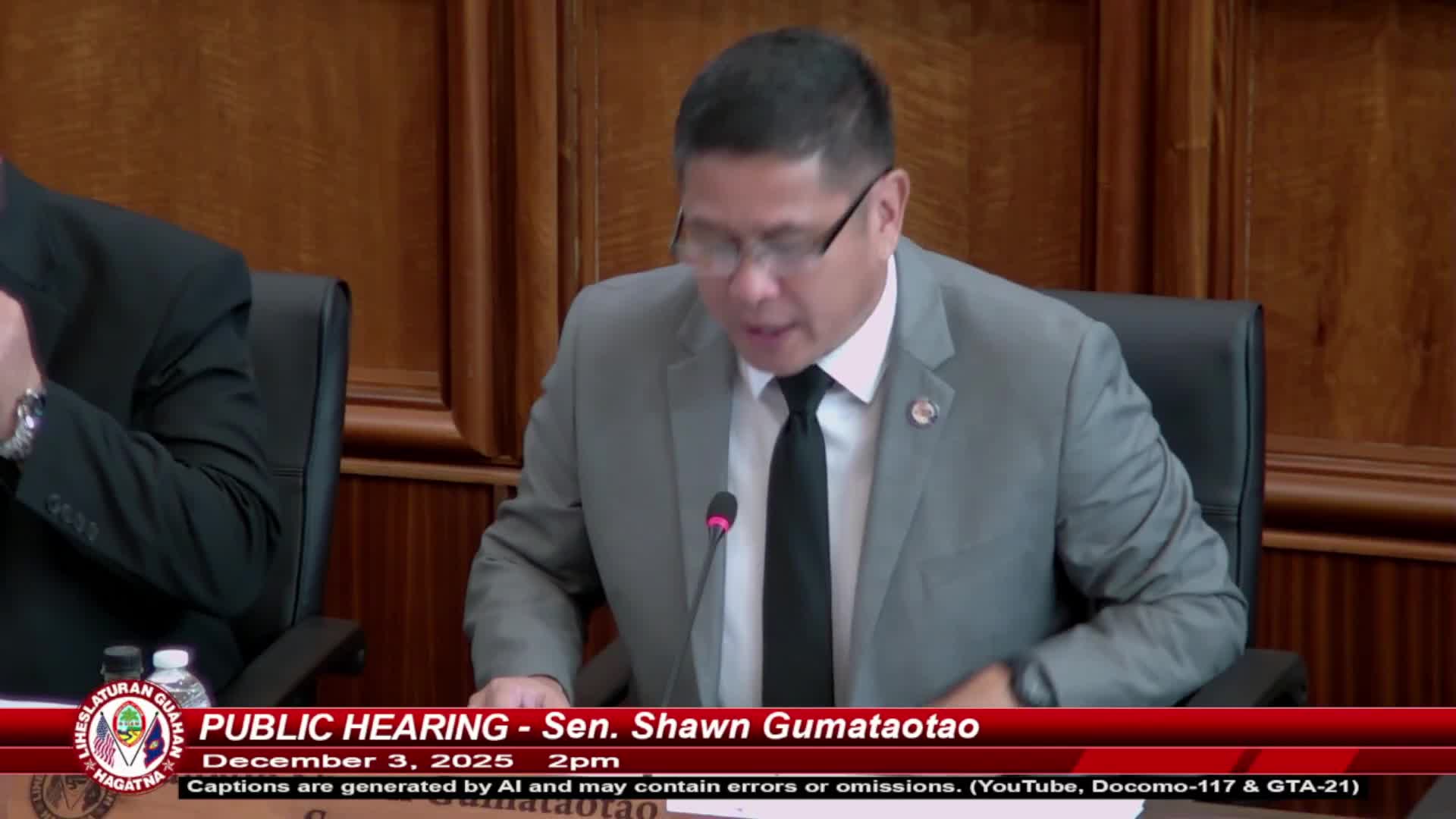
Summary
Senators and 34 written witnesses offered broad support for retired U.S. Army Colonel Karen L. Watson at a Dec. 3 confirmation hearing, while Watson told lawmakers her top priorities are building leadership depth, homeland defense readiness and transparent personnel processes; senators pressed her on residency and transition plans.
Colonel Karen L. Watson, U.S. Army (ret.), the governor’s nominee for adjutant general of the Guam National Guard, faced a daylong confirmation hearing Dec. 3 before the Committee on Public Safety, Emergency Management and Guam National Guard, where dozens of witnesses and several retired generals urged the legislature to confirm her.
The hearing, chaired by the committee, drew more than 30 speakers and 34 written testimonies submitted to the committee by the morning of Dec. 3. Supporters, many of them fellow veterans and Guam ROTC alumni, praised Watson’s command experience, humanitarian work and ties to the island. ‘‘She brings leadership experience to Guam along with master’s degrees in management, leadership and national security,’’ Reynaldo Abaganen, a University of Guam ROTC classmate, said in testimony.
Watson, who opened by recounting her Guam upbringing and family ties, told senators her immediate priorities would be assessing personnel gaps, strengthening homeland-defense readiness and building partnerships for collective training. "My focus has to deal with the personnel … building that bench of talented individuals," Watson said. On partnerships, she said she wants to expand ties with regional partners such as the Philippines, Palau and the Republic of the Marshall Islands and explore assistance from other states’ National Guards.
On technology, Watson said she would "be very careful with AI" and work with her J6 (cyber) team and Department of Defense briefings before expanding use. She described steps to help service members transition to civilian life — encouraging use of transition assistance programs, protecting time for retirement appointments and promoting outreach to reduce barriers to mental-health care.
Support for Watson came from high-ranking former Guard leaders who submitted letters and appeared in person. Retired Maj. Gen. Donald J. Goldhorn wrote that Watson’s record "speaks volumes" about her competence; retired Gen. Roderick Leon Guerrero noted her leadership in a humanitarian operation that helped thousands of Afghan evacuees. Several witnesses highlighted command and staff experience at Fort Gregg (formerly Fort Lee) and at Pentagon-level billets.
Senators also pressed Watson on questions of residency and process. Asked whether she maintained Guam as her home of record, Watson said, "My home of record right now is Guam," and confirmed she retired from active duty effective May 31, 2024. She said she holds a Guam driver's license and files federal taxes; she told senators she had not paid Virginia state taxes. On perceptions that an outsider was appointed, Watson said she is "from Guam," that she seeks to bring a neutral perspective and that her approach will be to implement standardized, transparent personnel processes to reduce perceptions of favoritism.
Lawmakers asked about training space and force structure. Watson said she would conduct a full personnel "lay down" and work to increase AGR (Active Guard Reserve) positions and other advocacy to grow Guam’s capabilities, while seeking out-of-island collective training opportunities when local space is limited.
On potentially contentious issues such as using Chamorro Land Trust parcels for training, Watson said she would first assess requirements and would coordinate planning and community consultation. She also said she does not tolerate harassment or assault within the Guard and that commanders must take such reports seriously.
The committee did not take a final vote in the hearing transcript. Chair announced the committee will continue to accept written testimony on Watson’s nomination until Dec. 10, 2025, and the hearing was adjourned at 5:08 p.m. local time.
If confirmed, Watson would assume responsibilities as adjutant general and director of the Department of Military Affairs, positions that the committee noted are governed by qualifications under 10 GCA §63201 and Public Law 38-68. The committee’s record includes the governor’s appointment letter dated Nov. 18, 2025, received Nov. 19, 2025.
The committee indicated it will consider additional written testimony and schedule further action in a January session; no confirmation vote is recorded in the Dec. 3 hearing transcript.