
Birmingham staff unveil Historic Preservation Master Plan, commission sends draft for public comment
Get AI-powered insights, summaries, and transcripts
Subscribe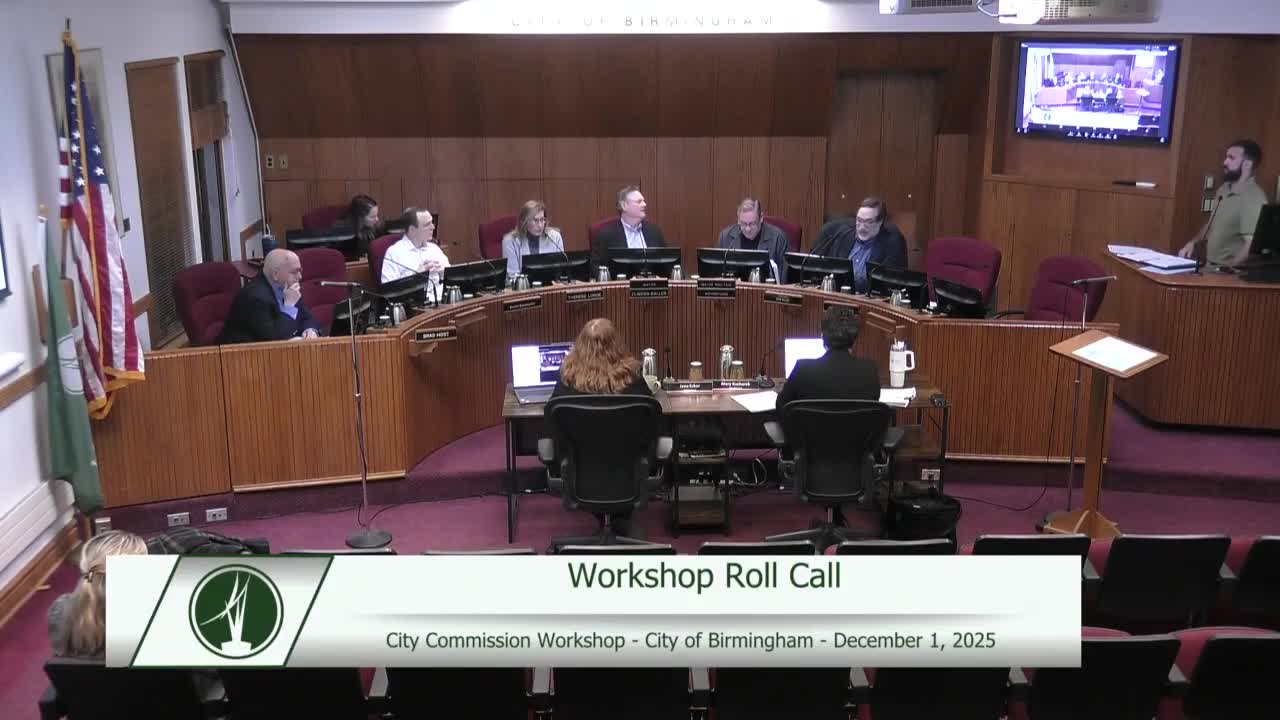
Summary
City Planning Director Nick Dupuy presented a draft Historic Preservation Master Plan calling for a proactive approach to protecting Birmingham’s historic buildings, recommending new tools including a demolition-delay ordinance and a revived heritage-home plaque program; commissioners raised questions about economic impacts and implementation capacity.
City Planning Director Nick Dupuy presented the draft Historic Preservation Master Plan to the Birmingham City Commission on Dec. 1, describing the document as an "aspirational" effort to move the city's preservation work from reactive responses to proactive stewardship.
Dupuy said the plan is organized into eight sections and includes updated 2024 building data, mapping showing nearly 800 buildings more than 100 years old, and an action plan organized around three goals: shore up existing resources, shift from reactive to proactive interventions, and increase public engagement. "I'm not here to sell you this plan," Dupuy said, "I'm here to hear you talk to me about this plan." He reported roughly 400 survey respondents, with about 94% supporting preservation efforts.
Key proposals include reviving a heritage-home recognition program and offering plaques in exchange for richer property data (build date, materials, historical associations), studying a demolition-delay ordinance to provide time to explore alternatives to wrecking, and more consistent review of noncontributing resources within historic districts. Dupuy said about 82 resources are formally designated now and identified roughly 36 Wallace Frost–associated properties as low-hanging candidates for additional study and possible designation.
Commissioners asked for details on how a demolition-delay tool would apply and what economic effects it could have. Mayor Ballard warned that delays could raise costs for developers and potentially affect sale prices; Dupuy said the demolition-delay concept is a time-limited, code-based tool (delays vary in other cities from 90 days to a year) and that he had not yet determined precise criteria or durations. "I don't have the answers right now," Dupuy said, noting staff would research other jurisdictions and the Historic District Commission would work through specifics before returning recommendations to the commission.
Other concerns included whether volunteer bodies have capacity to review many cases and whether designation would be voluntary. Commissioners and staff emphasized that designation would remain voluntary. Dupuy also described possible financial support options, citing programs such as the Paul Bruhn Preservation Grant as models for small maintenance subgrants to help owners avoid demolition-by-neglect.
The commission unanimously agreed to send the draft to the public-comment period after receiving a recommendation from the Historic District Commission. Dupuy asked commissioners to prioritize substantive content feedback (rather than typographical corrections) and said staff will share revised material and follow up on the policy questions raised.
The commission indicated it will review public comments and expect further, more detailed recommendations from staff and the Historic District Commission before adopting any regulatory changes.