
Heated Cupertino study session on Mary Avenue Villas splits neighbors and advocates over safety, parking and need for IDD housing
Get AI-powered insights, summaries, and transcripts
Subscribe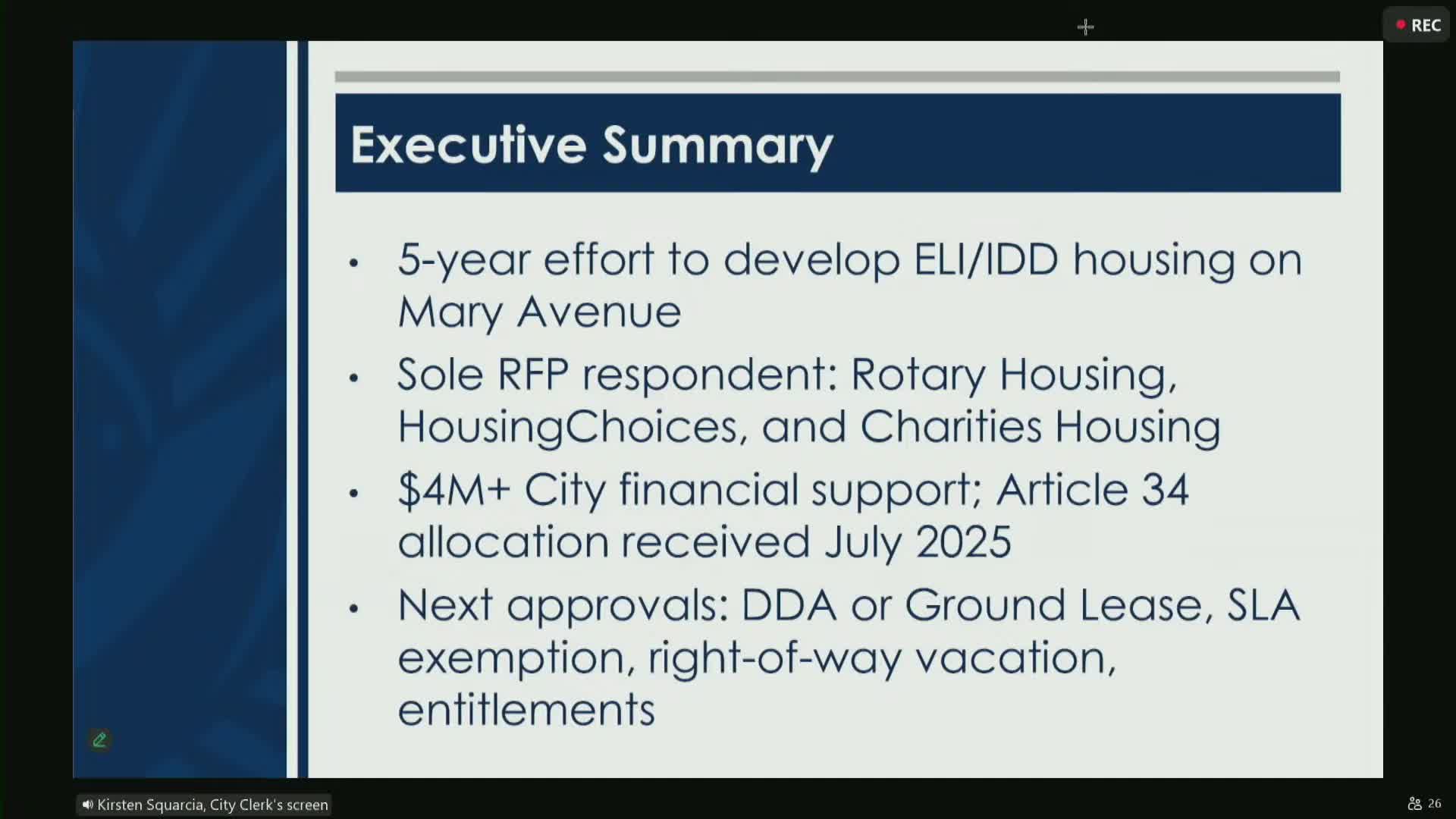
Summary
A packed study session on the proposed 40‑unit Mary Avenue Villas — a 100% affordable project with 19 units for people with intellectual and developmental disabilities (IDD) — produced dozens of speakers for and against; council appointed negotiators to continue talks and staff outlined steps needed for tax‑credit financing and surplus‑land compliance.
Cupertino — A long, sometimes contentious study session Dec. 2 over the proposed Mary Avenue Villas brought neighborhoods into a near‑unanimous objection-and-support divide: dozens of residents warned the project would narrow Mary Avenue, remove on‑street parking and create safety problems, while advocates and housing providers said the site is essential to meet the city’s very‑low‑income housing commitments and provide independent homes for adults with intellectual and developmental disabilities (IDD).
City staff and project counsel presented the site history, funding commitments and the procedural pathway the city must follow if it moves forward. Staff said the parcel was carved for an affordable‑housing use after a prior RFP process; the city has budgeted roughly $4 million in support (a $1 land conveyance plus BMR loan and other funding lines), and the applicant is seeking low‑income housing tax credits in April 2026.
Concerns from nearby residents focused on traffic, parking and safety. Speakers said the plan would remove up to 89 on‑street parking stalls, narrow travel lanes and put new buildings closer to existing apartment windows. “Forty housing units in exchange for hazardous and dangerous road conditions for 1,500 households is not a fair exchange,” said Roberta Murai, a Garden Gate neighborhood resident. Multiple speakers urged the council to stop the project and restart outreach.
Others urged swift approval. Supporters noted the city designated the site in the housing element and said the project addresses a defined need: “This is an exceptional opportunity to provide 40 units of affordable housing, including homes for adults with IDD,” said Gia Pham of Housing Choices, a service provider. Project representatives said third‑party traffic and contamination peer reviews are complete and that a soil‑management plan and oversight by Santa Clara County Department of Environmental Health would be required if contaminants are present.
Several commenters raised process and ethics questions, requesting conflict‑of‑interest reviews. Planning‑commissioner and longtime resident San Rao asked the city attorney to evaluate whether two council members should recuse because of past and familial ties to Rotary and Rotary‑affiliated housing efforts. Council members repeatedly said the project has a long history in the city’s housing program and that meeting processes for upzoning under the housing element differ from parcel‑by‑parcel rezoning.
City counsel and staff described the legal steps ahead: negotiate either a disposition‑and‑development agreement (DDA) with a repurchase option or a long‑term ground lease, perfect any Surplus Land Act exemption, complete a right‑of‑way vacation where required and prepare entitlements for a by‑right approval path (administrative review under housing‑element rules). Project counsel said completing a DDA and entitlements in time for the April 2026 9% tax‑credit round would strengthen financing applications.
After the presentation and two hours of public testimony, the council moved to appoint the city manager and city attorney as negotiators with Charities Housing, Housing Choices and Rotary‑related partners and to continue the item for further council action; the amended motion carried unanimously. The council also extended the meeting time to allow continued discussion. Staff said they will prepare the surplus‑land and vacation documents, work through DDA terms and return with discrete approvals for council consideration.
The debate highlighted competing civic priorities: residents’ safety and neighborhood character versus the city’s responsibility under the housing element to facilitate extremely‑low‑income housing and the practical challenges of securing tax‑credit financing.
What’s next: staff will continue negotiations, prepare required Surplus Land Act and vacation materials, and work to align schedule milestones with the tax‑credit application timeline. Any final disposition, ground‑lease or DDA and the forms of affordability covenant will return to the council for approval.