
San José council approves amendment to historic-preservation law after months of dispute over Levitt Pavilion
Get AI-powered insights, summaries, and transcripts
Subscribe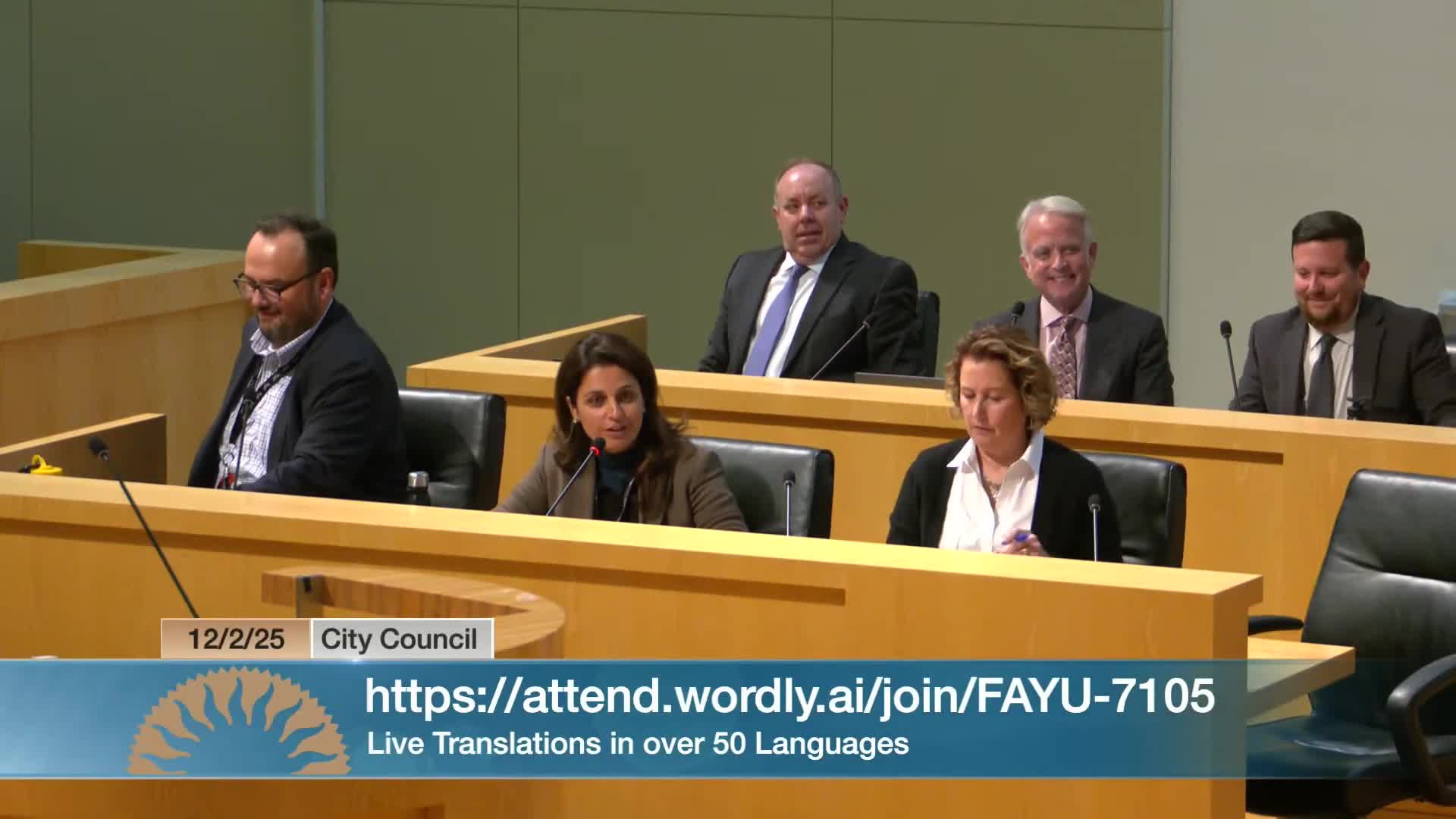
Summary
The City Council voted 9-2 to adopt staff-recommended amendments to the city's Historic Preservation Ordinance intended to give the council a clear path to weigh public benefits against historic impacts after an appellate ruling tied to the proposed Levitt Pavilion at Saint James Park.
San José's City Council on Dec. 2 adopted amendments to the city's Historic Preservation Ordinance (Chapter 13.48) intended to clarify how the council may weigh significant public benefits against harm to historic resources, the city said. The 9-2 vote followed more than two hours of public comment and debate about whether the changes would weaken protections for historic places.
The ordinance revision was presented by planning staff as a targeted response to a 2024 Court of Appeal ruling tied to the proposed Levitt Pavilion at Saint James Park. City staff said the amendments add an alternative "override" pathway that aligns local practice with state environmental-review procedures and clarifies definitions such as "detriment" and "historic integrity." Staff recommended adoption to provide the council a clear, documented way to make findings when a project has both historic impacts and demonstrable public benefits.
The measure drew large and polarized public comment. Opponents, including the Foundation for the Preservation of Saint-Clare and several neighborhood residents, argued the proposed changes reduce longstanding protections and that the city should complete additional environmental review (a supplemental EIR) before amending the ordinance. "The city is reducing protections that have long safeguarded our monuments," said Susan Brand Holly of the preservation foundation. She asked the council to delay action and conduct further environmental analysis.
Supporters, including Friends of Levitt, downtown business groups and multiple neighborhood residents who volunteer with Levitt programming, said the proposed language simply clarifies the city's existing authority and would help avoid protracted litigation that has delayed a decade-long effort to activate Saint James Park. Sharon Lazovsky, CEO of the Levitt foundation's local partner, said the venues nationally have spurred local economic activity and activation and urged the council to adopt the changes so the project can proceed.
Council debate centered on two questions: whether the ordinance, as drafted, preserves sufficient safeguards for private historic properties and whether adding a defined "public-interest" standard would create legal uncertainty. Councilmember Keimei (last name as recorded in the staff memorandum) proposed a blue-sheet memorandum that would add an "imperative public interest" finding as an explanatory criterion; the mayor and several colleagues argued the staff-recommended language already provides public-facing findings and that adding new technical terms could create ambiguity.
Councilmember Tordillos moved a substitute motion based on the staff recommendation; the motion passed 9-2 with Kaymey and Casey dissenting. The council directed staff to implement the ordinance changes and to continue public outreach on how the amendment will be applied to future public projects.
The vote resolves one of the legal issues raised in litigation over the Levitt Pavilion but does not itself approve or reject the Levitt project. The city attorney and staff emphasized that project-level approvals, CEQA review and permit-level findings will still be required before any construction begins. Mayor Mann thanked residents for their engagement and said the council had sought to balance preservation and community benefits.
Next steps: staff will finalize ordinance language, publish the adopted ordinance and incorporate the updates into the municipal code; project-specific environmental review and permit approvals related to Saint James Park will proceed through standard planning and CEQA processes.