
Principals present school improvement plans focused on SEL, technology and applied learning
Get AI-powered insights, summaries, and transcripts
Subscribe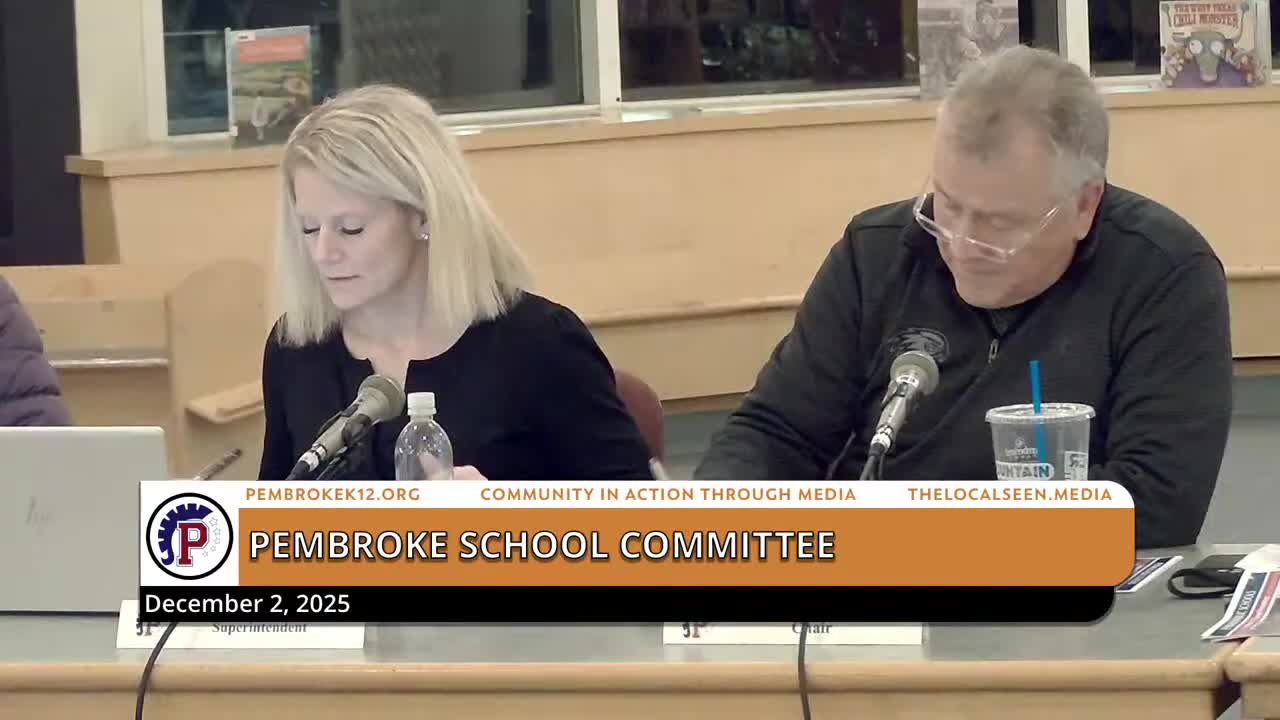
Summary
Principals from Pembroke elementary, middle and high schools outlined five-area school improvement plans emphasizing academic pilots, social-emotional learning, technology use, facility improvements and communication strategies tied to NEASC recommendations and district goals.
At the Dec. 2 meeting, building principals presented school improvement plans for their respective schools, each organized around the district’s five focus areas: achievement, social-emotional learning (SEL), technology, facilities and communication.
Elementary principal Ashley said the school is piloting Simplified Writing and FOSS science at the elementary level, launching a student-of-the-week recognition tied to core values, continuing Unified Sports and refining digital subscription use (MCAS, i‑Ready, DIBELS, Lexia) to ensure fidelity. Ashley also noted a recent playground ribbon cutting and that the district is moving toward a formal facility maintenance-request system for timelier custodial response.
A North Pembroke presenter said the school will continue to use DIBELS to track growth, standardize social-emotional language across classrooms and deploy a communications survey to better target family outreach. The presenter flagged building door latching issues and other facility items to be prioritized for safety.
The middle-school presentation described whole-group guidance check-ins, executive-function supports (like backpack cleanups), student leadership and service-learning plans (including a planned bag-lunch program for Father Bill’s) and efforts to reenergize student ambassadors.
High-school leader Mr. Talbert summarized two NEASC-driven achievement goals emphasizing applied learning and diversified assessments, and a second-year goal tied to structured collaborative professional time for teachers. He described social-emotional supports provided by a contracted consultant (Alexis Reed), technology goals led by Mike Tinker (device lifecycle, infrastructure, data security, planned cloud Wi‑Fi migration and classroom charging stations), and a new daily announcements video posted on the PowerSchool homepage to increase parent access to daily information.
Committee members praised the presentations and asked how progress would be measured; Mr. Talbert said the high school will use a rubric (created by staff, including Jonathan Shapiro) and classroom observations to monitor adoption and outcomes. Several members offered informal support for communications work and consistency across buildings.