
State Water Board adopts 2025 Safe Drinking Water Plan and sends it to the legislature
Get AI-powered insights, summaries, and transcripts
Subscribe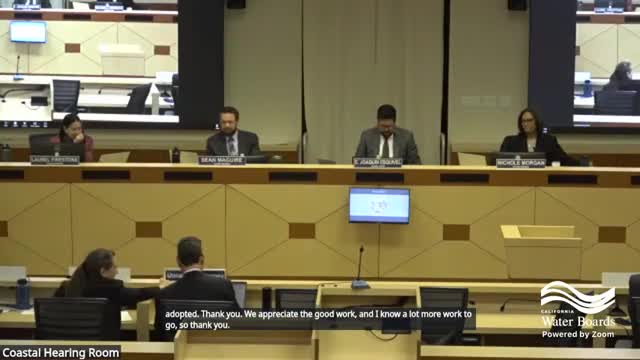
Summary
The State Water Resources Control Board unanimously adopted the 2025 Safe Drinking Water Plan Dec. 2 and authorized staff to submit it to the California Legislature under Health & Safety Code section 116355. The plan contains 70+ recommendations on capacity, financing, technology, and emergency preparedness.
The State Water Resources Control Board on Dec. 2 adopted its 2025 Safe Drinking Water Plan and authorized the executive director (or designee) to transmit the plan to the state legislature.
"The division is requesting the board adopt the draft resolution authorizing the submittal of the plan to legislature in accordance with health and safety code section 116355," said Lawrence Sanchez, who led the Division of Drinking Water presentation. The plan compiles analytical findings and more than 70 recommendations for legislative and program action to improve drinking-water quality across California.
The plan highlights accomplishments since 2020 — including establishment of new federal PFAS maximum contaminant levels, California's hexavalent chromium MCL, expanded funding and technical assistance, consolidation projects and a first-ever wastewater needs assessment — and lays out priorities for capacity building, data and technology improvements, financial tools and emergency preparedness.
Division staff noted the plan includes appendices with comment responses and a sortable recommendation spreadsheet for legislators and stakeholders. "The plan also includes an executive summary," Sanchez said, and staff will post the final plan and the comments-and-responses appendix on the State Water Board website following adoption.
Board members praised the plan as a compendium of program work and a foundation for continued action. The motion to adopt the plan carried unanimously.
Staff will file the plan with the legislature and continue outreach and implementation activities focused on small systems, consolidation, treatment methods and related funding programs.