Get Full Government Meeting Transcripts, Videos, & Alerts Forever!
Get email alerts on the Cal Waters Rollout topic
No spam. Unsubscribe anytime.
State launches Cal Waters reporting; Delta users told to transition off ERIMS
Summary
The Office of the Delta Watermaster and partners walked through Cal Waters, the Division of Water Rights' new reporting system, explained PIN-based account linking and migration from legacy ERIMS, and urged Delta users to check geospatial place-of-use mappings and contact staff for missing rights.
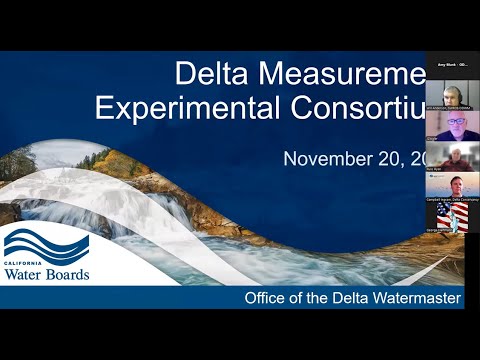
Cal Waters, the State Water Board Division of Water Rights' new reporting platform, is live for reporters and replaces the legacy ERIMS interface, the Delta Measurement Experimental Consortium was told at a convening of state and partner technical staff.
The Watermaster's office demonstrated the Cal Waters test environment and its "My Annual Reports" workflow, showing how OpenET-derived monthly acre-feet totals and geospatialized places of use are displayed. Alex Burke, an engineer with the Office of the Delta Watermaster, said the demo was a test environment and that submissions there are not yet official. "You can review your OpenET totals and, if you don't agree, choose to report measured data instead," Burke said.
Why it matters: Cal Waters centralizes annual reporting in a user-based account system rather than the legacy ERIMS, which is now read-only. The office told attendees that many Delta agents represent dozens or hundreds of rights and that staff are manually reconciling those agent-to-rights links. The office has distributed PIN codes to primary owners to connect existing rights to Cal Waters accounts.
Staff said common practical issues include multi-right portfolios and organization-level access. The senior engineer from the Office of the Delta Watermaster told the group: "We're working as quick as we can to make sure those are linked up together," and urged users to contact Cal Waters help if rights are missing.
Practical details: the demo covered authentication (multi-factor prompts), optional fields in the annual-report flow, and the option to attach documents and a signed checkbox before submission. Mark Ackerman (Stone Lakes deputy refuge manager) asked whether users should continue to report in ERIMS or move to Cal Waters; staff replied that "everything will be in Cal Waters" and that ERIMS is now in read-only mode.
Next steps: staff encouraged users who cannot see expected rights to contact Cal Waters support or the Watermaster office. The Watermaster's office also plans workshops and outreach for organizational accounts so multiple staff can access shared rights.
The meeting later moved on to measurement-regulation and project updates; the Cal Waters demo was intended to ease the reporting transition ahead of SB 88 implementation requirements.