
Oxnard approves multi‑million wastewater upgrades after inspectors find pipe corrosion
Get AI-powered insights, summaries, and transcripts
Subscribe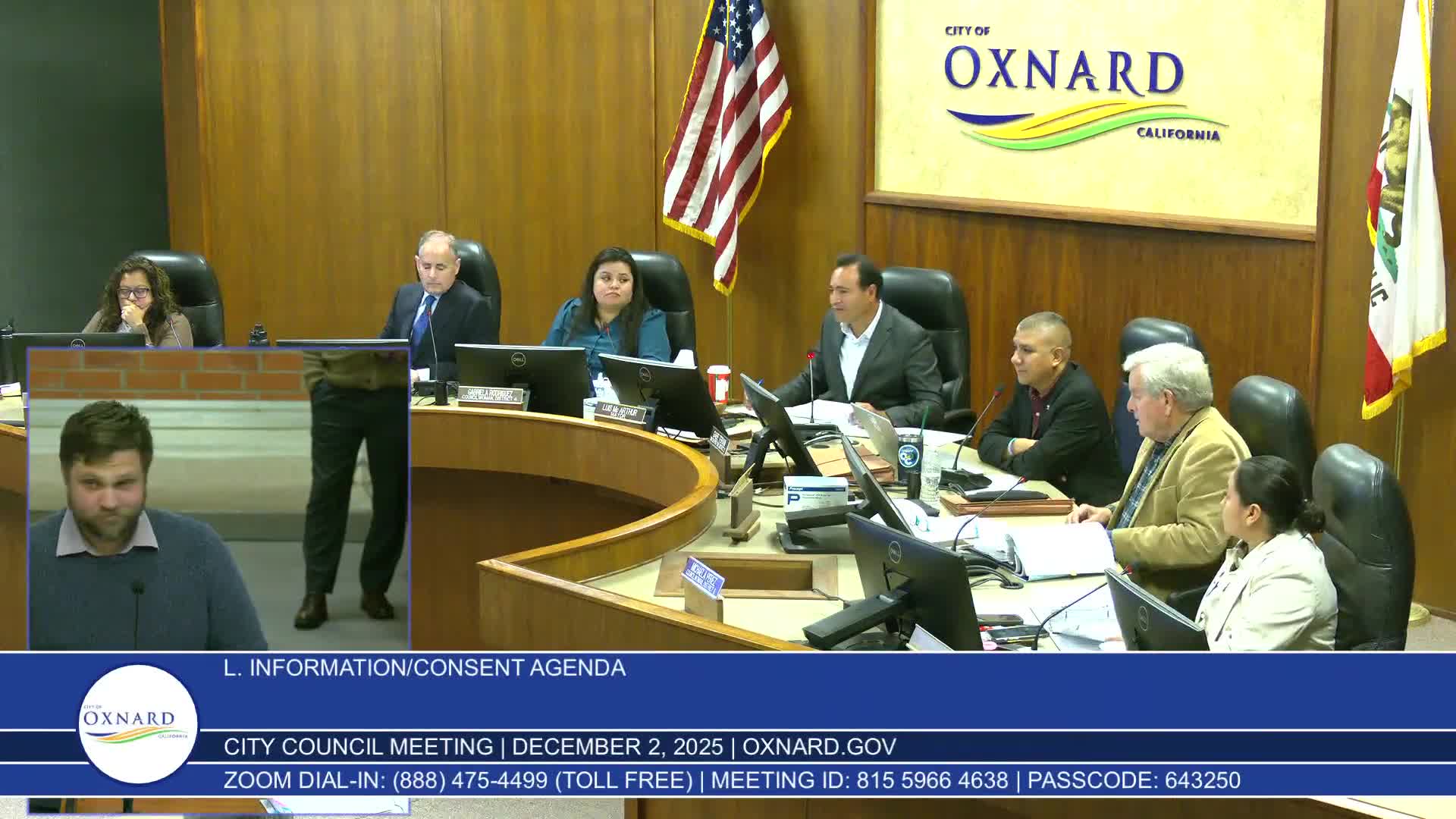
Summary
The council approved contracts and budget appropriations to repair and upgrade primary clarifiers and activated‑sludge tanks at the wastewater plant, citing hydrogen‑sulfide damage to aging piping and SRF funding requirements that shape procurement and contracting.
The City Council approved a package of actions to move forward with primary clarifier and activated‑sludge tank improvements at the Oxnard Wastewater Treatment Plant, including a construction contract, construction‑management services and an amendment to the design agreement.
Public Works staff said aging infrastructure has produced localized failures in underground primary‑effluent piping caused by hydrogen‑sulfide corrosion and that the project will target those vulnerabilities while adding reliability and odor control measures. Staff reported they found “soft spots” in asphalt and concrete that, when excavated, revealed localized pipe corrosion; design changes aim to keep pipe interiors fully wetted to limit sulfide damage.
The council approved (1) the project funding package and contract award for construction, (2) a construction‑management agreement with Corolla Engineers and (3) a fifth amendment with Brown & Caldwell to increase construction‑phase engineering services and extend the term through mid‑2028. Council members discussed the federal State Revolving Fund (SRF) conditions tied to the project—Davis‑Bacon prevailing‑wage rules, American Iron & Steel requirements and disadvantaged‑business outreach—and staff said the project schedule and bid timing were set to comply with those rules.
Tim Beaman, assistant public works director, said the department had received more than 200 requests for information during the procurement process and that the project team is documenting all questions and issuing addenda to ensure all bidders get the same information.
On costs, staff noted the engineer’s estimate from 18 months earlier did not reflect recent construction‑cost escalation; the construction award and contingency plus associated project allocations raised the total program amount before the council. Council unanimously approved the actions to proceed.
Next steps: The city will finalize contract documents, move to notice to proceed and begin construction per the SRF timetable; staff said they will continue public outreach to neighbors and monitor potential change‑order claims closely.