Get Full Government Meeting Transcripts, Videos, & Alerts Forever!
Get email alerts on the Lv Collective topic
No spam. Unsubscribe anytime.
Residents, students and housing advocates urge council to reject LV Collective student housing project
Summary
Dozens of residents, student organizers and housing advocates told Charlottesville City Council the LV Collective student-housing proposal will drive displacement and traffic, and that projected tax revenue will not benefit the city’s most vulnerable residents.
Dozens of residents and student organizers urged Charlottesville City Council to oppose the LV Collective student-housing proposal, saying the development will accelerate displacement and worsen traffic in nearby neighborhoods.
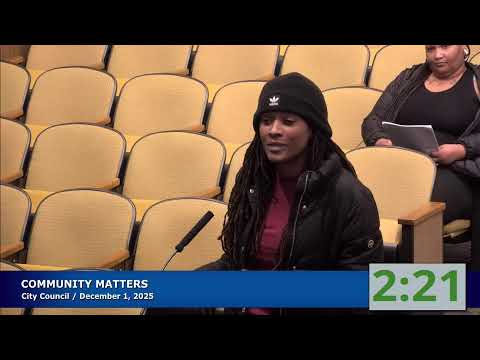
At the meeting’s community‑matters period, Wendy, an organizer with FAR, told council that promised tax revenue does not guarantee better social services and that long‑time West Haven and 10th and Page residents currently face higher property appraisals and police contacts. “Tax revenue is not distributed equally to everyone,” she said, arguing that luxury student housing contributes to gentrification and loss of generational homes.
Student group Friends of FAR, represented by Abba, reiterated student opposition and framed the project as another instance of university land take, urging the council to prioritize the broader Charlottesville community. Terry Tyree, a Virginia Organizing chapter leader, linked the LV Collective to transportation and safety priorities, saying the project “would dramatically increase traffic, congestion, and pressure on the very corridor we’re trying to fix,” referencing the Barracks Road/Emmett Streetscape effort.
Other speakers echoed calls for stronger zoning tools and deeper affordability. Sophia of the Public Housing Association of Residents said the city needs “deeply affordable housing,” not just market‑rate 'affordable' units, and urged zoning‑code changes to give residents more input.
Speakers also pointed council to technical concerns raised in a Timmins Group traffic‑impact analysis, including the study’s omission of construction traffic and long construction timelines. Jim Snyder noted proximity to railroad tracks, limited fire access and potential safety consequences of tall student‑housing buildings adjacent to active rail lines.
Council acknowledged the concerns and said the item will be considered at upcoming work sessions, including a tentatively scheduled January work session to discuss possible zoning changes. No formal council action on LV Collective was recorded during this meeting.