Get Full Government Meeting Transcripts, Videos, & Alerts Forever!
Get email alerts on the Short Term Rentals topic
No spam. Unsubscribe anytime.
Green Bay council refers short-term rental rules to staff after hours of public testimony
Summary
After more than three hours of public testimony and debate, the Green Bay Common Council voted to refer short-term rental (STR) ordinance revisions and enforcement options back to city staff for drafting with stakeholder input, rejecting immediate minimum-stay and annual-day caps for this legislative cycle.
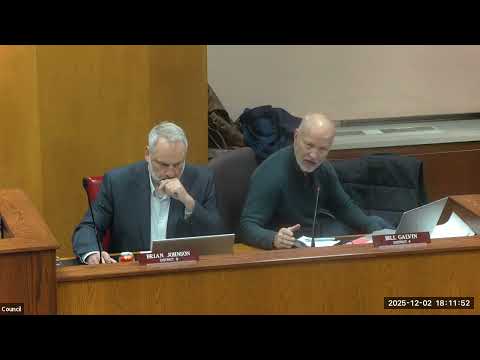
The Green Bay Common Council on Dec. 2 voted to refer its draft short-term rental ordinance and related enforcement options back to city staff for further work with alderpersons, the Short Term Rental Alliance, the Equal Rights Commission and community members.
Council action followed roughly six hours of discussion and more than three hours of public testimony in a packed chamber. The council's referral removes proposed minimum-stay and maximum-days-per-year limits from immediate consideration and directs staff to return with clearer, enforceable regulatory language and enforcement procedures.
Why it matters: The decision leaves intact the council’s near-term focus on enforcement mechanisms — how to identify violations, how to handle repeat problems, and what penalties or due-process steps should apply — while postponing broader policy choices such as caps or minimum stays that some alders and members of the public had urged. Supporters of stricter rules argued limiting STRs would return housing to the long-term market and ease affordability pressures; opponents and many operators said better enforcement and operator best practices would address nuisance issues without removing lodging options or harming small operators.
What the council did: Alder Brian Johnson moved the amendment to reject minimum-stay and 180‑day cap provisions for this legislative cycle and to refer the ordinance back to staff; the motion passed and the council adopted the ordinance as amended to send to administration for redrafting and stakeholder work. Director Renierwig told council staff can revise enforcement language and work with the groups named in the referral.
Public testimony and competing evidence: Residents and neighborhood advocates described experiences of higher rents, an eroding vacancy rate and problems they attribute to STRs. One speaker, Charles Knight, representing neighborhood associations, said, “Now is the time to support regulations and create long term rental housing for Green Bay,” and urged owner-occupancy exemptions and other protections for neighborhood housing. Several residents said STR conversions had priced renters out of neighborhoods.
Operators and the STR Alliance pushed back, describing compliance work and data that they said shows licensed STRs reduce some categories of police calls. Brooke Tassell, an STR Alliance leader, told the council their analysis of city parcel and call data showed “an average reduction of 93% across all 442 listings” when comparing reported calls at properties before and after licensing. Alliance members and operators urged co-creation of workable enforcement rules rather than immediate caps.
Council debate and practical next steps: Alders who represent neighborhoods with heavy complaint volumes pressed to see stricter penalties and a clearer chronic-nuisance process; others urged staff to develop specific, enforceable definitions for strikes and violations so the city does not create ambiguous rules that could be applied unevenly. Several alders asked staff to produce a timetable and to identify which proposed fixes would require ordinance changes versus administrative policy.
What to expect next: The referral directs staff to draft ordinance and policy proposals in consultation with the named stakeholders and return recommendations to council committees as appropriate. The council's action does not adopt caps or minimum-stay rules tonight; it signals a preference for refining enforcement tools and engaging stakeholders before broad policy changes are reintroduced.
Council outcome: Motion to refer (as amended) passed and the item was referred to staff for redraft and stakeholder engagement. The council also directed staff to propose clearer definitions of qualifying violations, due process language for permit revocation, and recommended changes to the noise/chronic-nuisance enforcement framework.