Get Full Government Meeting Transcripts, Videos, & Alerts Forever!
Get email alerts on the Land Use Housing topic
No spam. Unsubscribe anytime.
Santa Monica planning commission pauses SB 11‑23 code changes, asks staff for more outreach and analysis
Summary
After a lengthy staff presentation and public comment, the Planning Commission continued a proposed ordinance to codify SB 11‑23/SB 684 implementation — including ADU allowances, a proposed 1.5 FAR and a 33‑foot height limit — to Dec. 17 and asked staff for more analysis, diagrams and public engagement.
Santa Monica’s Planning Commission voted unanimously on Nov. 19 to continue consideration of a city ordinance to implement state laws SB 11‑23 and SB 684, asking staff to return Dec. 17 with more public outreach, diagrams and technical analysis.
Planning staff summarized council direction to allow accessory dwelling units (ADUs) in developments using the state laws and to modify local development standards. Staff said the proposed amendments would codify council policy to permit a maximum 1.5 floor‑area ratio (FAR), allow up to three stories/33 feet in some cases, reduce front‑yard setbacks (no less than 10 feet), and eliminate certain stepbacks. The presentation also noted that council direction would remove the Affordable Housing Production Program (AHPP) in‑lieu fee for projects of five or fewer units. “SB 11 23 is state law. We are required to implement it,” staff said during the presentation.
The commission’s technical questions focused on how the 1.5 FAR and 33‑foot height were chosen, whether there is an economic analysis showing the AHPP fee waiver is needed for five‑unit projects, and how ADUs would be treated for affordable‑housing obligations. Staff said there is no recent economic study; ADUs do not count toward the AHPP unit requirement; the 1,200‑square‑foot minimum lot size for new parcels in R‑1 is part of the proposed local adjustments; and at least one SB 11‑23 application had been submitted to the department.
Public comment was robust and largely skeptical of the draft changes. John Alley urged the commission not to move forward without an emergency‑evacuation capacity analysis, citing wildfire evacuations in other parts of the region. Mark Borenstein told commissioners the draft is “cut and paste from the emergency ordinance” with little vetting. Heather Thomason warned the draft would permit dramatically larger developments in R‑1 neighborhoods and urged limiting ADUs and retaining two‑story maximums in many cases. “This ordinance matters enormously because SB 11 23 projects seem likely to become a dominant framework for development in our R1 neighborhoods,” Thomason said.
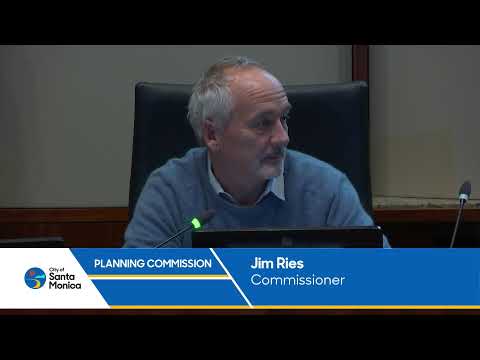
Commissioners repeatedly stressed the need for more public outreach and clearer implementation details. Several said they favored following the state law baseline while staff prepares additional analysis — including visual diagrams and the potential for tiered ADU allowances tied to lot size — before adopting any local code that goes beyond the state minimums. Commissioners also expressed concern about waiving AHPP fees without a feasibility study and asked staff to analyze possible ADU workarounds that could avoid on‑site affordable units.
Rather than vote on the ordinance, the commission adopted a motion to continue the public hearing to Dec. 17, to reopen the hearing for additional public comment and to request that staff provide refined materials, examples and analyses (including ADU tiering options and visualizations) to inform commissioner recommendations to council. The motion passed by roll call unanimously.
The commission also acted on routine business. It approved October minutes with instructions to change “ex parte” wording to “voluntary ex parte disclosures,” and to update the minutes to reflect applicant commitments that appear on the audio record; and it approved the annual planning commission work plan, adding items including bike‑plan updates, communications around major construction projects and recommendations for future zoning ordinance cleanups.
Next steps: staff will return Dec. 17 with the requested diagrams, analyses and an opportunity for additional public comment before the commission forwards a recommendation to City Council.