
Agua Fria board approves medical academy and fire‑rescue pathway to expand career training
Get AI-powered insights, summaries, and transcripts
Subscribe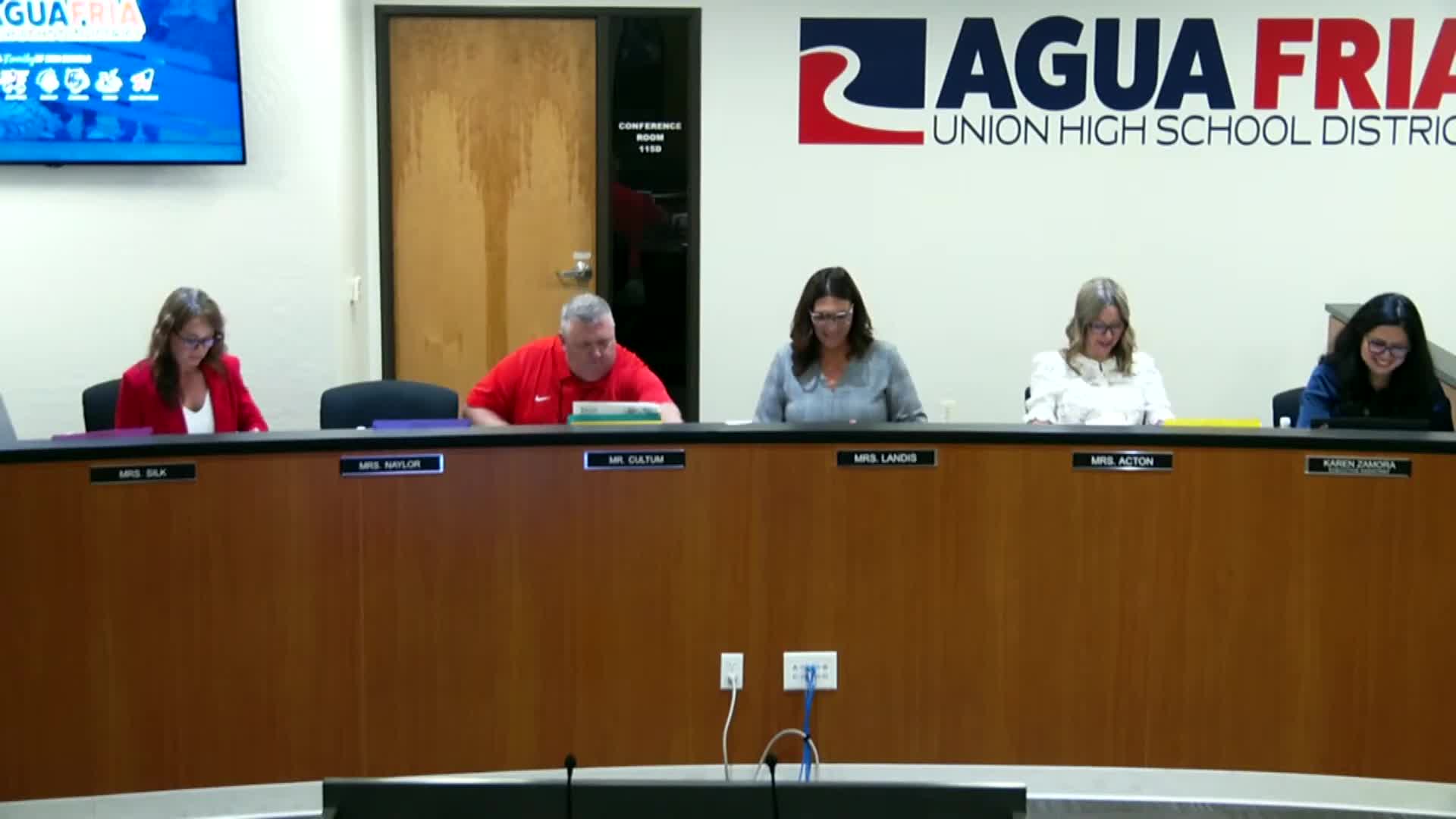
Summary
The Agua Fria Union High School District board approved a new Medical Academy and a partnered fire-and-rescue pathway intended to provide clinical and nonclinical health-care training, simulation labs, and a fire/EMS cadet pipeline; the vote was unanimous. Partners include local fire departments, Rescue Ready/Respiratory Education, and health systems observed during district visits.
The Agua Fria Union High School District governing board on Nov. 12 approved a proposal to create a Medical Academy and a fire-and-rescue pathway intended to expand career and technical training for high school students.
District presenter Mr. Nowlin outlined a three‑track Medical Academy — “clinical degree‑seeking, clinical certificated, and nonclinical health‑care careers” — and said the district would include a simulation lab and a public‑facing clinic to give students hands‑on experience. "Health care careers is absolutely 1 of those areas that's a high wage, high need," Nowlin said during his presentation.
The board-approved plan envisions immersive programming for a large cohort of students; the presentation listed a projected enrollment range of about 800 to 1,000 students and cited a target opening year of 2028. (The transcript also included an unclear reference to a possible groundbreaking year that could not be verified from the record.)
Buckeye Fire Chief Rhodes and Courtney Rios of Rescue Ready described the fire‑and‑rescue pathway that will be paired with the Medical Academy. Chief Rhodes called the program “a recruitment tool” aimed at generating homegrown candidates for fire and EMS work, noting national declines in public‑safety applicant pools. A Rescue/Respiratory Education partner said students completing the three‑year pathway would be eligible for credentials including EMT and Fire 1/2 and receive training such as CPAT evaluations.
Board members asked for logistical details about admission criteria and whether the academy model would be a fully immersive single school or a program housed alongside other academies; Nowlin confirmed the intention for an immersive model for students enrolled in the Medical Academy pathways. The district presentation referenced visits to exemplar programs, including Banner’s simulation center and established magnet medical academies in Texas and California, to shape curriculum and facilities planning.
The motion to approve the proposal was made during the meeting and carried unanimously with votes recorded as Silk — yes; Colton — yes; Landis — yes; Acton — yes. The motion text on the record was: “Be it resolved the governing board approve the medical academy and fire rescue pathway as presented.” The motion’s mover and seconder were not identified by name in the transcript.
Next steps discussed by staff include partnership agreements with health‑system and public‑safety partners, procurement for facilities and equipment, and further detail on application and selection criteria for selective-entry programs.