
Middle-school student defends district's approach as parent raises questions about taxes
Get AI-powered insights, summaries, and transcripts
Subscribe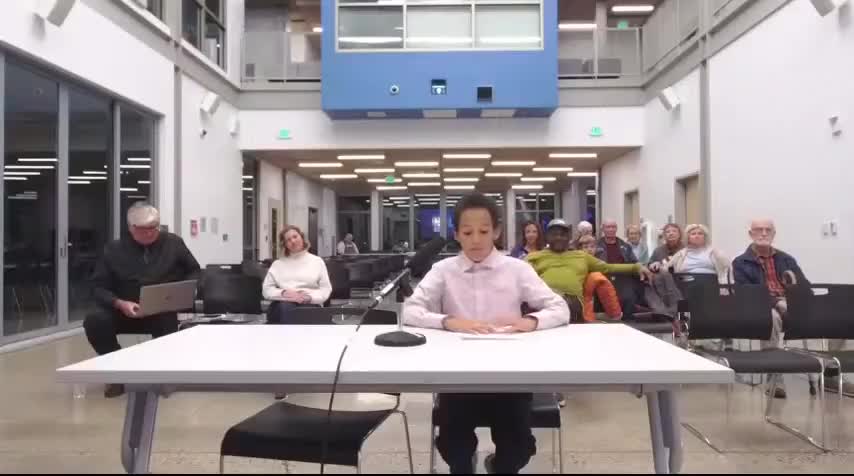
Summary
A sixth-grade student praised Durango School District No. 9-R's teachers and social-emotional learning, saying the district does not "change kids," while a parent questioned how her roughly $900-a-year property tax contribution aligns with district per-pupil spending figures.
Jordan Johnson, a sixth-grade student at Miller Middle School, told the Durango School District No. 9-R board that teachers "show kindness, respect" and disputed claims that the district is "changing kids," saying he had never been asked about his gender or pressured by staff.
"This is my sixth year at Durango Schools, and I've never heard a teacher ask me about my gender or try to influence how I identify," Jordan said, adding that social-emotional learning (SEL) in his experience amounted to "30 minutes every few weeks" and morning crew meetings of about 10 minutes.
Why it matters: Jordan's remarks put a student voice at the center of a broader debate over curriculum and SEL, offering the board direct testimony that educators'according to a current student'are prioritizing kindness, safety and digital-literacy topics.
During public comment that followed, parent Heather Ock said she has paid approximately $12,785 in property taxes over 15 years (about $900 a year) and asked how the district's per-student spending (she cited a figure of $17,520 per year) is being accounted for and whether taxpayers can direct specific uses of those dollars.
"How can I make sure that my contribution to the school district has been properly accounted for and spent in a way that I would individually designate?" Ock asked, calling for transparency on how tax dollars are allocated.
Board response and context: The board's public-participation rules were read before comments began; staff noted public comments are public records and are not a forum for dialog with the board during the comment period. No formal action or vote followed Ock's question during the meeting; the board did not announce specific follow-up steps on itemized expenditure accounting at the time.
What happens next: The session moved into staff presentations after public comment. The board did not take a formal vote or commit to a specific audit of spending in response to the parent's remarks during the meeting.