Get Full Government Meeting Transcripts, Videos, & Alerts Forever!
Get email alerts on the Forensic Hospital Capacity topic
No spam. Unsubscribe anytime.
State hospital official: slow benefits, bed limits and documentation delay discharges for Baltimore County patients
Summary
At a Baltimore County coordination meeting, the state hospitals’ discharge chief warned that limited high-security beds, lengthy Social Security processing and missing paperwork are creating months-long delays for people found incompetent to stand trial and others needing community placements.
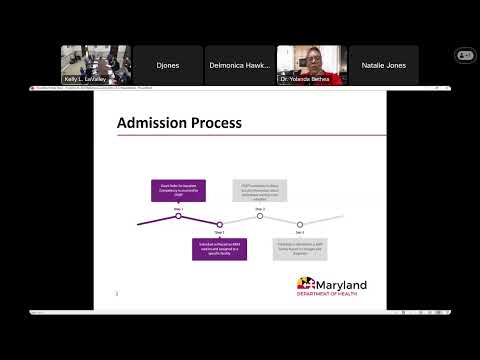
At a Baltimore County mental-health coordinating meeting, a state hospital official outlined a series of bottlenecks that are keeping people who need inpatient forensic care from reaching state beds and slowing their return to the community. Gloria, who said she oversees five state hospitals and discharge decisions, told committee members that the system is constrained both by security-level bed limits and by bureaucratic delays that make it hard for providers to accept patients.
Gloria said hospitals triage admissions by clinical acuity and by the legal charge: "The person with a heart attack gets in faster than the person with the sprain day," she said, describing how high-felony cases are routed to Perkins, which has a limited number of maximum-security beds. That routing, she said, contributes to waitlists and transfers to more distant facilities.
Why it matters: Delays in admitting people who need forensic hospital care and in discharging those who are ready can extend detention and increase costs for county detention centers, stress local providers and complicate community reentry for people with serious mental illness.
Gloria outlined how legal and clinical tracks must be resolved before many discharges. "There are two tracks that must work at the same time," she said, noting the court reevaluations every six months on the legal side and clinical work to stabilize diagnoses. She added that benefits and documentation are frequent stumbling blocks: "We're the fourth worst state in the country right now," Gloria said of Social Security processing times, citing a 330-day processing estimate for SSI applications that leaves providers waiting months for payment.
The hospital chief gave county-specific placement data to illustrate capacity pressures. She said Perkins discharged 843 people statewide last calendar year and that Baltimore County referrals were placed across several hospitals: "We placed 9 people at Perkins. The majority of your folks, 45, went to Spring Grove, followed by 18 at Springfield," she said. For Baltimore County specifically, she reported 418 total discharges in the period examined.
Barriers to safe community placement included missing school records needed to document intellectual disabilities for DDA services, lost IDs or immigration paperwork, and months-long waits for community-option waivers. Gloria said she and state staff have started hiring immigration-attorney specialists to help replace documents but warned the process can take up to a year in some cases. She emphasized that providers are often unwilling to hold beds or accept patients without assurance they will be reimbursed once benefits are processed.
County detention staff pressed for the primary causes of delay and whether the bottleneck was beds or paperwork. Gloria said both matter: arrests and identification have increased since COVID, raising volume, while benefits and provider payment delays slow discharges. She added that some patients who refuse services upon discharge end up homeless and are among the most likely to return to the system.
Next steps: Gloria recommended closer pre-screening and more timely transfer of vital documents at arrest, earlier consult calls with placement providers and transitional visits to ready patients for community life. Committee members signaled interest in sharing prescreen packets and improving cross-agency data-sharing to shorten waits.
The meeting ended with members agreeing to circulate the presentation slides and to continue coordination at the next scheduled meeting.