Get Full Government Meeting Transcripts, Videos, & Alerts Forever!
Get email alerts on the Site Improvement Goals topic
No spam. Unsubscribe anytime.
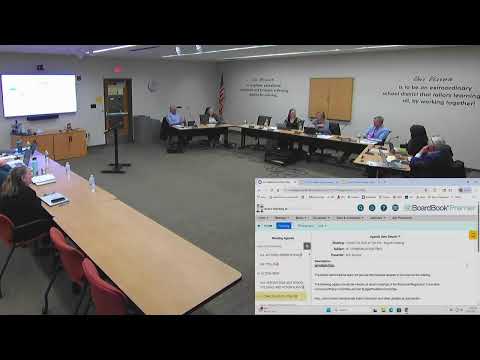
Alexandria board approves 2025–26 site improvement goals after data‑driven presentation
Summary
The Alexandria Public School District board approved site improvement goals for 2025–26 after a presentation by Trish Perry and instructional coaches outlining assessment methods (FastBridge/FAST, STAR, CAPTI, MCAs) and building‑level targets across early ed, elementary, middle and high school.
The Alexandria Public School District board voted to approve the district’s site improvement goals for the 2025–26 school year following a detailed presentation by Trish Perry and instructional coaches Jill Fuglsad and Amy Morgan.
The presentation laid out districtwide targets and the assessment systems that will be used to measure progress. Perry described goals for early education such as increasing the share of preschool students meeting a social‑emotional target (Devereux Early Childhood Assessment) from 91% to 92% and raising emergent‑literacy proficiency. Instructional coaches explained that the district uses universal screeners — FAST/FastBridge in K–3, STAR for grades 4–8 (and grade 9 math), and CAPTI for ninth‑grade reading — given three times a year (fall, winter, spring) within the MTSS (Multi‑Tiered System of Supports) framework to identify needs and target interventions.
School‑level targets included modest percentage gains on benchmark and growth measures: Voyager Elementary targets 1–2 percentage‑point gains on FAST reading and STAR measures; Woodland Elementary seeks a rise from 60% to 62% of K–1 students at or above the 40th percentile on early reading benchmarks; Lincoln’s fourth and fifth grade reading growth target moves from 47% to 50% on SGP measures. At the high school level, the district set a college/career readiness target of 97% for the Class of 2026 (measured by a set of benchmarks) and incremental increases in ACT/ACCUPLACER readiness measures.
Presenters emphasized how the district will use class‑wide, small‑group and individualized interventions based on screener results and explained that composite scores and student growth percentiles (SGP) are central to tracking progress. The presenters also noted recent changes in assessment norms and the addition of CAPTI for ninth‑grade screening.
Board members asked questions about norming (including post‑COVID adjustments), parental response rates to building surveys, and how teachers differentiate instruction for students above the 75th percentile as well as those below benchmarks. After discussion, a board member moved to approve the site improvement goals and the motion passed by voice vote (ayes).