Lifetime Citizen Portal Access — AI Briefings, Alerts & Unlimited Follows
Beaufort HAC: Teacher survey finds space, materials and online-access burdens; committee to accelerate curriculum writing
Loading...
Summary
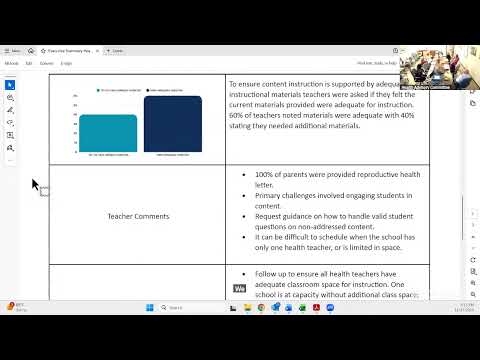
A survey of middle-school health and PE teachers showed 80% reported classroom space and felt prepared, while 20% sought additional materials. Committee members discussed online-textbook access that requires roster-level edits, classroom constraints, and agreed to move up district curriculum writing to address gaps.
Miss Emily, presenting results of a teacher survey to the Beaufort County Health Advisory Committee on Nov. 17, said the survey of middle-school PE/health teachers showed 80% of respondents reported having a classroom space for health instruction and 80% said they felt adequately prepared, while roughly 20% requested additional materials.
The committee focused on three main implementation problems identified in the results: repeated or out-of-date textbook content across grade levels, limited classroom space at one school that is using the gym for instruction, and the technical burden of providing selective online access to textbook chapters. "We had 80% of the teachers reported that they did have a place in the building to use a classroom," Emily said in the presentation, and she added that a single school remains at capacity without additional classroom space.
On online access, presenters said the HAC-approved adoption covered physical textbooks only and that a publisher initially represented the online package as "all or nothing." Emily said the publisher and district technology staff confirmed there is a way to hide chapters at the roster level, but that approach requires individual teachers or tech staff to update access for each student roster. The presenter summarized the teacher response: "Five teachers said, I would; it's worth it to me," referring to teachers willing to manage the roster-level work, while others declined because of the time and risk involved.
Committee members pressed for clearer guidance for teachers on questions that fall outside permitted classroom material. Presenters said teachers should refer students to trusted adults—counselors, school nurses or parents—when a question is outside the required content and that the district will provide follow-up training on materials and resource use. "They just feel like they leave the students hanging," Emily said of the teachers' concern about student questions.
As a next step, the HAC agreed to identify specific curriculum gaps reported by teachers, instruct the district's curriculum-writing team to develop supplemental lessons and bring refined options back to the HAC for review. Staff indicated curriculum writing, typically performed in summer, will be moved up to address the gaps sooner.
Committee members also discussed the limits of state authority and resourcing. Several members noted a state-level coordinator manages multiple responsibilities and that the committee should document gaps carefully before requesting a change in state standards or staggered implementation by grade.
The committee requested that staff gather and verify exact response counts and provide clarifying documentation to inform curriculum-writing tasks and any formal requests to district or state bodies.