Get Full Government Meeting Transcripts, Videos, & Alerts Forever!
Get email alerts on the Parkview Playground topic
No spam. Unsubscribe anytime.
Bradley County board keeps large Parkview playgrounds in place, adds pre‑K equipment for $7,000 net
Summary
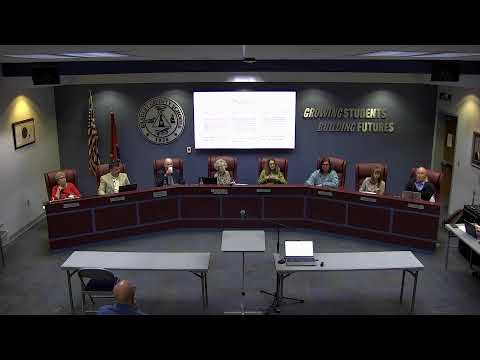
At a special meeting Oct. 20, the Bradley County Board of Education rejected a $35,000 relocation and approved leaving two large playground structures in place while adding a pre‑K play area for a net $7,000 after a $15,000 contribution from the architect/engineer.
The Bradley County Board of Education on Oct. 20 voted to keep two large playground structures at Parkview Elementary where they were installed and to add a pre‑K play area, a decision that implements Option 2 at a net cost to the district of $7,000 after a $15,000 contribution from the project architect and civil engineer.
The vote followed a lengthy discussion over three options presented by project staff: disassemble and relocate both tower structures to their originally intended locations (Option 1, net $35,000 and about three weeks of manufacturer work); leave the towers where they currently sit and add an age‑appropriate pre‑K section (Option 2, net $7,000 and four to six weeks for fabrication and installation); or do both (Option 3, net $57,000). A motion to approve Option 1 failed on a 5–2 roll call; a subsequent motion for Option 3 failed for lack of a second. The board then adopted Option 2 by roll call.
Why it mattered: staff and several board members said the equipment was installed on the opposite sides of the campus from what the original plans called for. Project representatives told the board the taller structure is rated for ages 5–12 and the shorter structure for ages 2–12; the shorter structure ended up on the third–fifth grade side and the taller structure was being assembled on the kindergarten–second grade side. The district’s maintenance and the vendor said manufacturer liability and warranty considerations make relocation a labor‑intensive job that requires the manufacturer to disassemble and reassemble the units.
Principal Jody Granon, speaking for Parkview, urged the board to consider preschool needs: “We have 4 preschool classrooms currently, which is more than any other Bradley County school. We would greatly benefit from equipment especially designed for that age group,” she said, adding that some preschool classrooms serve special‑needs (CDC) students who cannot be moved across the building.
Board debate centered on tradeoffs between correcting the installation error and conserving contingency funds, and on daily operational impacts such as walking distances between classrooms and play areas. One board member noted the project was under budget and that the architect and civil engineering firm had agreed to contribute $15,000 toward corrective work; another cautioned about long‑term placement, saying playground decisions last decades and affect teachers and students every day.
The board heard technical details from staff: manufacturer work to relocate both towers would take about three weeks and originally quoted $50,000 gross; with the architect/engineer contribution the net district cost for relocation would be $35,000. Adding the pre‑K section alone was quoted at $22,000 before the $15,000 contribution. Option 3 (both relocation and added pre‑K) had a combined gross of $72,000 less the $15,000 contribution, for a $57,000 net cost to the district. Staff estimated delivery and installation times of four–six weeks for new pre‑K equipment.
During discussion board members cited measured walking distances of roughly 100–125 feet from some classroom doors to the new playgrounds, up to 250 feet from the school center to each playground, and up to about 400–630 feet depending on specific classroom locations. Maintenance staff said the large structures have large concrete footers and embedded steel that limit what components can be salvaged; swings and other smaller parts are being reclaimed and redeployed in other schools.
On procedure: a motion to disassemble and relocate the two play structures (Option 1) was moved and seconded but failed on roll call; a motion for the combined approach (Option 3) failed for lack of a second; the board then moved to adopt Option 2 and approved it by roll call. After the vote, the chair declared the meeting adjourned.
What happens next: staff will proceed under the adopted Option 2—leaving the towers in place and purchasing and installing the pre‑K equipment—per the vendor’s timeline, and the district will reuse salvageable components where safe and warranty‑compliant.
Adjournment: The meeting concluded immediately after the vote.