Board directs county to craft contracting policy for security services to ensure livable wages, benefits
Loading...
Summary
Supervisors voted to direct the county executive to develop a contracting policy for county security services that would require responsible contracting standards, including wages and benefits; security officers and union representatives urged adoption at the meeting.
San Mateo County supervisors on Dec. 2 directed the county executive to develop a contracting policy for county‑awarded security services that mirrors the county’s prior responsible‑contracting framework for janitorial services, including wage and benefit standards.
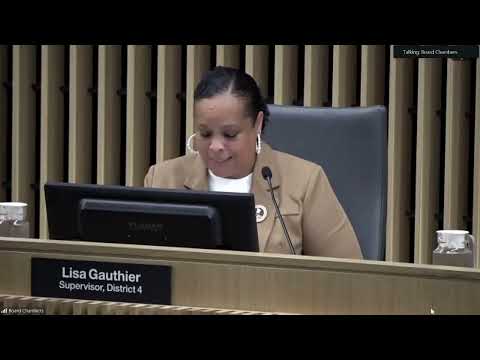
The resolution, introduced by Supervisors Canapa and Gauthier, cited national Bureau of Labor Statistics figures for security‑guard wages and local cost pressures. Supporters, including front‑line security officers and union representatives, said collective bargaining agreement (CBA) standards for wages and health care would improve worker retention and service quality.
Worker testimony and union support Security officers and union representatives spoke in chambers and via Zoom. One officer said the lack of contract stability and predictable benefits makes it difficult for security staff to remain on the job, and urged the board to require CBA‑level protections for contractors.
Board action and next steps The board voted to adopt the direction for the county executive to establish the policy. County executive staff said they can review countywide contracting standards and report back; supervisors asked staff to evaluate extending responsible contracting principles to additional contract categories in future work.
Implication The resolution begins a policy development process rather than immediately changing existing contracts; staff-level work and legal review will be required to translate the board’s direction into contract language and procurement rules.