Get Full Government Meeting Transcripts, Videos, & Alerts Forever!
Get email alerts on the Nonprofit Grants Recovery topic
No spam. Unsubscribe anytime.
Six nonprofits report progress on Avery County opioid‑settlement and recovery work
Summary
Representatives from six locally funded nonprofits updated the Avery County Board on progress: funding levels, services delivered, staffing and program metrics for recovery, naloxone distribution, youth prevention and alternative‑to‑suspension programs; most groups have received 50% of awarded funds to date.
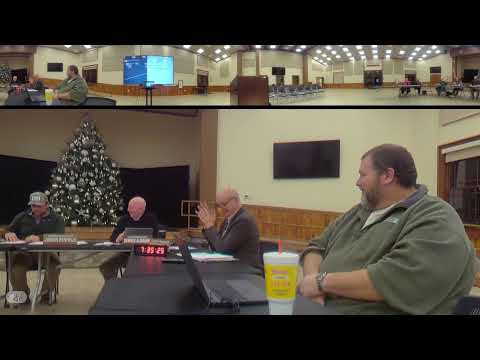
At the Dec. 1 meeting the Avery County Board of Commissioners heard progress reports from six nonprofit partners funded under county strategies, including programs supported by opioid-settlement and other grant funding.
County staff summarized that each nonprofit received 50% of its grant upfront and must provide financial progress reports to receive the remaining funds. The county-approved strategies cover recovery support, naloxone distribution, post-overdose response, criminal-justice diversion, youth prevention and housing-related supports.
Broken World Ministry (Brian Tower, president) said its grant supported three program lines — power repair, a car-donation program and education/workforce training — and that the organization repaired dozens of vehicles in 2024, hired one full-time employee and spent about $19,091 on equipment setup to date. Tower said the grants are helping the group reduce dependence on grants by developing fee-for-service activity.
High Country Community Health (Sarah Clark) reported that a behavioral health position saw 196 unique patients in Avery County since July 1, 2025; the clinic spent $10,772.22 on salary and $930.41 on fringe benefits for that position in the reporting period and has distributed 52 naloxone doses from its community 'purple pantry.' Clark said remaining grant funds will support behavioral-health services and additional naloxone and supplies.
Marjorie Williams Academy (Dr. Cindy Austin) outlined a K–5 intervention program targeting students affected by opioid-related family trauma, described eligibility and exit criteria tied to benchmark assessments (DIBELS and NC Check-Ins), and said classroom progress will be reported to the county in follow-up updates.
The Mediation and Restorative Justice Center (Marissa Cornell) described the Avery RV mobile outreach unit, called 'Wheels of Change,' and the group's use of opioid-settlement strategies plus leveraged funding (VIA and DHHS) to support mobile peer support, naloxone distribution and law-enforcement-assisted diversion services. Staff reported MRJC had received $50,000 and spent roughly $15,700 as of Oct. 31, leaving about $34,000 for program operations.
Western Youth Network (Amber Dixon) described three local programs — community health coordination, mentoring and new after-school youth programming — and reported that two cohorts of the alternative-to-suspension curriculum had served 17 unduplicated students (11 quit-the-hit kits distributed) as of Oct. 31; the program aims to expand into middle schools and train staff as tobacco-prevention specialists.
Speakers emphasized continued collaboration among nonprofits, the county and other partners, and staff reminded commissioners that the nonprofits will return with further updates in 2026 after completing additional reporting requirements. County staff also invited commissioners to a drug-crisis roundtable on Dec. 15 and public input meetings on Feb. 19.