Get Full Government Meeting Transcripts, Videos, & Alerts Forever!
Get email alerts on the Moral Instruction Policy topic
No spam. Unsubscribe anytime.
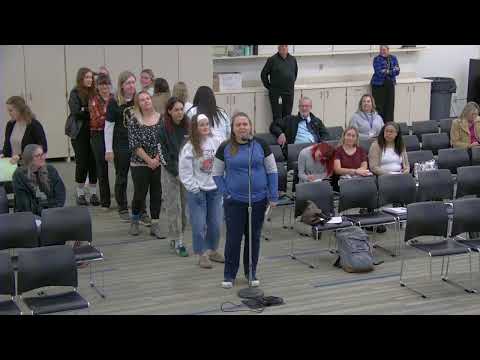
Boone County Board rejects KSBA-drafted ‘moral instruction’ policy after hours-long debate
Summary
After hours of public comment and detailed board discussion about logistics and legal uncertainty, the Boone County Board of Education voted down the KSBA-drafted board policy 8.135 intended to implement KRS 158.200; opponents cited loss of instructional time and operational burden.
The Boone County Board of Education voted down a proposed policy (8.135) to implement KRS 158.200 after a lengthy second-reading debate that laid bare logistical, instructional and legal concerns.
During public comment, teachers and community members urged trustees to reject the policy. "I hope you vote against it," said teacher Carrie Judd, arguing the plan to allow students to leave campus for moral instruction would be "very disruptive to our school day" because of time lost for walking to lockers, checking out and returning.
The measure — a KSBA (Kentucky School Boards Association) sample policy the district was reviewing after recent state legislation — would require each school to designate a single one-hour weekly block during which approved providers could take participating students off campus. Board legal counsel reminded trustees that KRS 158.200 is permissive: districts "may" provide the opportunity but must consider every written provider application; a recent Attorney General opinion requires boards to take up any written application but does not compel approval.
Board members who opposed the policy argued that the design does not scale across Boone County's 27 schools, each with different master schedules. "This is not the work of public education," said board member Wolf, summarizing a recurring theme among dissenters: the policy would impose an ongoing administrative burden and could remove an average of roughly 26 hours per year from participating students' instruction. Board members also highlighted transportation risks, supervision needs for non-participating students and the statutory requirement that remaining pupils be assigned noncredit enrichment during the hour.
Supporters described the policy as a neutral framework that would set baseline expectations — insurance, background checks and transportation plans — for outside providers and could make the district less vulnerable to claims of arbitrary denials. Counsel said the policy would allow the board to "manage expectations" and provide consistent grounds for approvals or denials should applications arrive.
After the discussion and a roll-call vote on the second reading, the motion to adopt policy 8.135 failed on the board floor (recorded vote noted as failing 1–4).
What happens next: The statute still requires the board to consider any written provider submissions. Counsel said individual provider applications received after the vote would be placed on a board agenda and could be denied on district-wide logistical grounds if the board chooses to do so. The board did not adopt the KSBA sample policy at this meeting and indicated it may continue to seek legislative clarification.
Provenance: Topic introduced at SEG 1280 and debated through SEG 2719. Quotes and details drawn from public comment (SEG 1032–1212), board member remarks (SEG 1300–1418), and statutory/legal exposition (SEG 1540–1610).