Get Full Government Meeting Transcripts, Videos, & Alerts Forever!
Get email alerts on the Nuisance Alarms topic
No spam. Unsubscribe anytime.
Middletown committee presses staff to rewrite nuisance-alarm ordinance to include tenant responsibility
Summary
The Middletown Public Safety Committee agreed on a three-step response for repeat nuisance alarms—notice, meeting, then court referral—and asked staff to produce a third draft of a proposed ordinance that clarifies who can authorize citations and spells out landlord/operator and tenant responsibilities.
The Middletown Public Safety Committee on Tuesday advanced work on a proposed nuisance-alarm ordinance, asking staff to prepare a third draft that adds explicit language about landlord/operator and tenant responsibility and clarifies who may authorize enforcement.
Committee members, fire officials and staff framed the issue as one of public-safety resources and repeat false calls. Chief Brady told the committee that several Middletown properties have generated repeated alarms — singling out 29 Center Street, which he said triggered the system 49 times in 10 months — and that many of the incidents stem from people smoking or vaping inside private spaces that set off hardwired building alarms. "We're responding [with] million-dollar fire trucks for smoking," Chief Brady said, noting the strain repeated responses place on equipment and personnel.
Alex, who drafted earlier versions of the ordinance, described the second draft’s enforcement sequence: after a first nuisance alarm, the fire chief or inspector can issue a written notice; a subsequent false alarm leads to a discretionary meeting with the owner or operator to discuss corrective steps; and continued noncompliance or failure to attend the meeting can be referred to city court. The draft included fines (Alex said the minimums were $100 or $500) and a maximum period of incarceration not to exceed 15 days to preserve the court’s ability to issue warrants when defendants fail to appear, language Alex said was not intended as a routine sanction.
Committee members debated a recurring set of questions: who should have the discretion to authorize a prosecution (elected fire chiefs, the fire inspector, the mayor, or a City Hall official), and how the ordinance should treat tenant behavior versus system failures. Alex acknowledged the current second draft did not address tenants and recommended adding operator/tenant language; the committee asked him to prepare a third draft that includes those provisions.
Several members urged a referral model patterned on existing code enforcement practice: chiefs or inspectors identify probable nuisance cases and make a referral to City Hall, where a staff reviewer (the committee discussed "Jacob" as the staff role that reviews DPW/code enforcement cases) would determine whether formal charges should proceed. "The inspectors go out. They do what they gotta do. But they don't bring the charges technically," one committee member said in describing the existing DPW process.
Dr. Johnson told the committee that conscientious property operators should be able to present documentation of repair efforts (invoices, receipts or service visits) at the corrective meeting to show they have attempted to fix a system issue. Other members echoed the need for a reasonable opportunity to fix genuine mechanical faults while still holding owners/operators accountable when tenants repeatedly cause alarms.
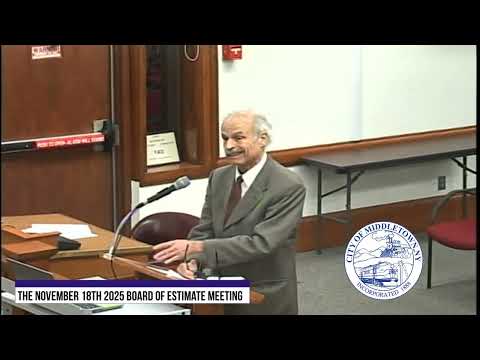
No formal motion or vote was recorded. The chair directed Alex to draft a third version incorporating tenant/operator responsibility and clearer authorization steps (committee discussion named the mayor, Alex and Jacob as potential authorizers) and to return the revised ordinance to the committee for further review.
The committee closed the meeting after a round of member comments backing prompt finalization of the ordinance to reduce unnecessary emergency responses.