Get Full Government Meeting Transcripts, Videos, & Alerts Forever!
Get email alerts on the Appointments topic
No spam. Unsubscribe anytime.
Charlotte council pauses MPTA appointment plan, orders more transparency and a refined process
Summary
Council members debated how to vet nominees to the new Metropolitan Public Transportation Authority and voted to defer finalizing the work group's appointment process until next Monday, asking for objective candidate "buckets," daily applicant lists and interview schedules. The work group had proposed a fast timeline tied to the PAVE Act.
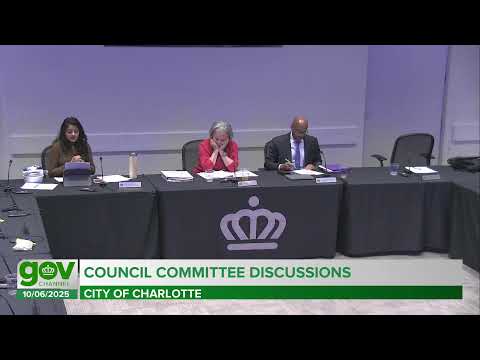
Charlotte City Council on Monday paused a plan to accept a three-member work group's slate of nominees for appointments to the new Metropolitan Public Transportation Authority and directed staff to return next week with a clearer, more transparent process.
The council voted to defer after an hours-long discussion that pitted advocates of a tightly vetted slate against members who said the work group should deliver only objective facts and category "buckets" so full council could decide. James Mitchell, who chaired the work group, had proposed a timetable that would close applications Oct. 13, run interviews Oct. 20—/30 (52 hours total; 25 minutes per applicant) and aim for nominations and council votes in November. Interim City Attorney reviewed the PAVE Act eligibility rules that will govern the authority, including residency, prohibitions on current elected officials, a small-business seat and other qualifications.
Why it matters: The new transit authority will have 27 trustees; Charlotte is allocated 12 appointments under the statute. Council members said they want assurance the process is not perceived as preselected or opaque and insisted on public access to applicant lists and interview streams. Several members also raised conflict-of-interest concerns where a sitting council member had applied and might need to recuse herself from related votes.
A work-group friction point was the role of partner nominators. Staff confirmed the Charlotte Regional Business Alliance and the Foundation for the Carolinas will run their own selection processes for their recommended seats, but their nominees will be provided to city staff and shown to council before votes. City staff said an applicant PDF is posted on the city clerk—s website and will be updated daily at 4 p.m.; the application window closes Oct. 13 and appointments are expected to be made on or by Nov. 24, 2025.
Council deliberations focused on three options: let the work group (a small panel) return a short recommended slate, have the work group present a larger recommended pool (e.g., 12—15 names) for council selection, or have the work group only provide fact-based categories and no recommendations. Several members proposed a hybrid: objective buckets plus a larger recommended pool to preserve both council control and the work group's vetting labor.
Direct quotes from the meeting included the interim attorney's timeline: "The window for applications is open now and it closes on the October 13 and then the council makes appointments on or by 11/24/2025" and a council summary that the work group had committed to "52 hours" of interviews. Council members insisted that any recommendations be grounded in objective criteria (experience categories enumerated under the PAVE Act: law, finance, engineering, urban planning, public transportation, etc.).
What the council directed: the work group will refine and return next Monday with a process that includes: - an explicit rubric or category buckets showing which applicants meet which qualification categories; - the published schedule for interviews (virtual access allowed); - a clear public record of who has applied (staff reiterated the clerk—s applicant PDF is live and updated daily at 4 p.m.).
The council's deferral does not change statutory deadlines in the PAVE Act; members repeatedly noted the city must act quickly to ensure Charlotte fills its allocated seats should the referendum pass.
Next steps: the work group will revise its process and return with clarified recommendations, interview schedules and a public rubric; the council plans to consider the appointment slate in November per the PAVE Act timetable. The committee also recorded the formal motions on the record and will circulate the applicant materials in advance of the next meeting.