Get Full Government Meeting Transcripts, Videos, & Alerts Forever!
Get email alerts on the Transportation topic
No spam. Unsubscribe anytime.
RIDE presents busing consolidation plan to Chariho committee, cites pilot savings
Summary
The Rhode Island Department of Education representative laid out a three-phase plan to reduce transportation costs by using statewide capacity and optional route reviews; the presentation included data on student declines and rising costs and prompted committee questions on liability, contracts, and local impacts.
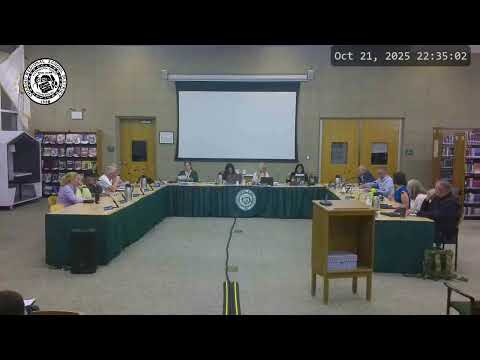
Rhode Island Department of Education (RIDE) Chief Operations Officer Mario Carreno presented to the Chariho school committee on Oct. 21 a statewide approach intended to tame rising school-transportation costs.
Carreno told the committee that Rhode Island has about 23,400 fewer students than 20 years ago and that transportation costs are up about 61% over the past decade (20% since COVID in the most recent three-year period). "I can't think of anything worse than spending money on empty buses," he said, arguing the state and districts are often duplicating routes and paying for underused capacity.
RIDE proposed a three-phase plan: phase 1 would use statewide routes to pick up students currently carried by districts (where routes already exist), allowing districts to 'shed' buses and retain savings; phase 2 is an optional independent route review for districts (vendor-procured and prorated by district size; example fee cited: about $8,500 for Chariho); phase 3 would be longer-term coordination and possible joint contracting across districts. Carreno said early pilots (Providence, Cumberland and Coventry) yielded immediate local savings and that every bus reduced can be worth roughly $100,000 per year.
Committee members asked practical questions about liability and contractual labor issues: several noted that start and end times for bus runs are often written into labor contracts and any change may require negotiation with unions. Carreno acknowledged those constraints and said the proposal is optional and data-driven: "First, we're just giving you data, and then we would have that conversation thereafter." He also said RIDE would not charge districts for seats when state routes already pass through a town; the state would pick up students at existing stops.
Members also raised concerns about competition with local private carriers and driver relationships; some parents worried about students' continuity with familiar drivers. Carreno said the early focus is AM/PM routes (not after-school runs) but the study could expand and that the district would decide how much to participate.
RIDE requested district route data to compile a January–February report aimed at informing budget decisions. Committee members agreed to consider an independent route review and stressed they would need legal and operational clarifications before making commitments.