Get Full Government Meeting Transcripts, Videos, & Alerts Forever!
Get email alerts on the Education Instructional Strategy topic
No spam. Unsubscribe anytime.
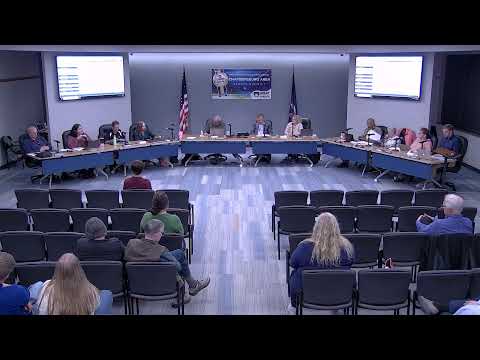
CASD directors outline goals: reading by 3rd grade, math fluency by 5th and school consolidation plan
Summary
Three newly appointed directors for elementary, middle and high school presented strategic priorities focused on literacy, math fluency and the logistics of consolidating five elementary schools as part of the district's "schools of distinction" effort; the board will receive more detailed data at a future meeting.
DREW NELSON, the district's director of elementary education (Pre-K through Grade 3), told the board the district has three strategic goals this year: ‘‘reading by the end of third grade, fluency in math by the end of fifth grade, and successful building consolidation.’’ Nelson said the district will use three metrics for the reading goal (Acadience composite at or above benchmark; proficiency or better on MAP projected PSSA; and proficient/advanced on the third-grade PSSA) and reported that only 46 percent of CASD third graders met the reading goal last year, compared with a state average of 55 percent.
Nelson described steps the district will take to improve outcomes: expanding structured-literacy professional development for K–3 staff, scaling a "Walk to Read" small-group intervention to all elementary schools (six currently use it), deploying additional intervention specialists and building a family learning toolkit to help parents practice reading and math strategies at home. He said the district will use MTSS (multi-tiered system of supports) to identify at-risk students early and deliver targeted Tier 2 and Tier 3 interventions.
"We have a plan. We have a team. We have a path for one Trojan community," Nelson said, noting 162 Pre-K students are enrolled across nine classrooms with outreach planned to those families.
Melissa Cashdollar, director of middle-level education (grades 4–8), described efforts to create a unified middle-level model across CAMS North and South, including coordinated walkthroughs to measure student engagement and a plan to pilot a unified middle-school schedule for 2026–27. Cashdollar said her team has emphasized content specialists as instructional coaches and mentors for first-year teachers and that the district intends to provide a detailed professional-development calendar before the end of the school year.
Deborah Luffey, director of grades 9–12, said her three pillars are culture (transparent communication and student supports), academic excellence aligned to the district's "schools of distinction" metrics (including Keystone participation and AP/IB exam uptake), and operational efficiency (scheduling and leadership development for assistant principals). Luffey described Cassius's transition to Schoology, the high school's block scheduling challenges and planning for career academies modeled on specialized programs the district has visited.
Board members asked about curriculum choices (Nelson said the district's open-court reading contract is not up for renewal for several years), reasons some schools outperform others ("multiple factors," Nelson said), and hard choices tied to consolidation, including where special-education programs will be housed. Nelson said the district will present more granular building-level data at an upcoming board meeting and that options under consideration range from mandatory summer supports to adjusted grade schedules; retention at third grade remains an option to be vetted.
Next steps: directors will return with more detailed data and transition plans, and the board will continue community engagement on rezoning and consolidation.