Get Full Government Meeting Transcripts, Videos, & Alerts Forever!
Get email alerts on the Snap Programs topic
No spam. Unsubscribe anytime.
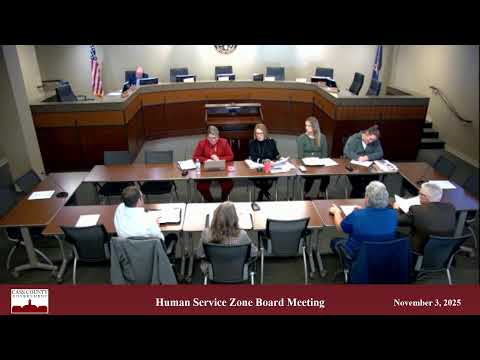
Cass County advisory board hears how HR 1 and high error rates could raise state SNAP costs
Summary
At a November meeting, the Cass County Human Services Advisory Board heard from Rebecca, North Dakota’s director of Economic Assistance Quality Control, that a 10.2% statewide SNAP payment error rate and provisions in HR 1 could require states to pay a share of benefits under a new sliding scale, and local staff are launching targeted training and technology fixes to reduce errors.
Rebecca, director of Economic Assistance Quality Control for North Dakota, told the Cass County Human Services Advisory Board at its November meeting that federal changes and the state’s current payment‑error performance could create new costs for North Dakota.
Rebecca said federal quality control targets set by USDA’s Food and Nutrition Service require a payment‑error rate at or below 6% and timeliness of 95%. She reported that North Dakota’s midyear 2025 state payment error rate is 10.2% and that, under the federal law discussed in the presentation (referred to in slides as HR 1), states with error rates at or above 6% may be required to pay a portion of SNAP benefits on a sliding scale. Using figures shown to the board, Rebecca summarized the example sliding scale: error rates of 6–7.99% could require states to pay 5% of benefits, 8–9.99% a 10% share, and 10% or more a 15% share. A chart in the packet estimated a potential state cost impact roughly around $120 million (Rebecca: projection shown in slide materials).
Rebecca emphasized the distinction between QC functions and fraud investigations: “Quality control does not measure fraud. We are not looking at fraudulent activity,” she told the board, adding that QC focuses on improper payments, timeliness and case/procedural errors.
The presentation explained why errors occur and what the state is doing to reduce them. Common causes cited included missed household updates (for example, a newborn not added to a case), incorrect application of policy, or client reporting failures. To reduce errors, Rebecca outlined targeted measures including on‑site “heat” visits to high‑error zones, interview checklists, narrative templates for QC reviewers, in‑system prompts to catch likely mistakes before workers close a case, vendor consultations and enhanced training for supervisors and frontline staff.
Rebecca also explained procedures that trigger corrective action: when a payment error of $1 or greater is identified, the QC team issues an SFN‑512 notification to the affected zone and pursues corrective steps. She described North Dakota’s two‑tier QC review process in which the state QC team conducts an initial review and FNS performs a federal re‑review.
Board members asked several operational questions. Rebecca confirmed that the 95% timeliness target refers to calendar days (30 days for regular applications, 7 calendar days for expedited cases) and that North Dakota elected the ‘minimum’ sampling plan for reviews because of team size. On staffing, Rebecca said a typical national caseload guideline for QC is about eight to nine active cases and 10–11 negative cases, and that North Dakota will adjust staffing to meet required samples as the caseload grows.
The packet and the presentation also noted substantive policy changes in HR 1, including new work‑requirement constraints for the adult‑without‑dependents (ABOD) category (three months of eligibility in a 36‑month period unless the individual meets activity thresholds), a cap on household size for benefit calculation (nine members), and changes to noncitizen eligibility categories. Rebecca said some provisions took effect immediately upon enactment (effective 07/04), while others will phase in by federal fiscal years.
The board recorded a procedural action earlier in the meeting to approve the prior meeting minutes with adjustments (motion made and seconded; voice vote in favor). The advisory board did not take any formal action on HR 1 or funding changes at this meeting; Rebecca’s briefing was presented for information and planning.
What’s next: Rebecca and the QC team plan additional trainings and heat visits targeted at zones that drive most errors; the board was encouraged to use packet materials and Rebecca’s contact information for follow‑up questions.