Lifetime Citizen Portal Access — AI Briefings, Alerts & Unlimited Follows
Carlisle Area SD unveils $98 million middle‑school plan, proposes Wagner's Gap roundabout to ease campus traffic
Loading...
Summary
Architects presented a site‑and‑floor plan for a new middle school sited on existing athletic fields and laid out traffic improvements across the main Carlisle campus, including a proposed roundabout on Wagner's Gap Road; the district set an Act 34 public hearing for Nov. 13 and estimates the all‑in middle‑school project at about $98 million.
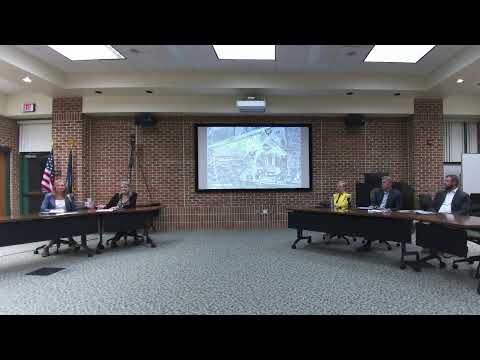
Architects and the school district told the Board‑as‑a‑Whole on [date not specified] that a proposed new middle school sited between the Turnpike and Wilson Street would require campus‑wide traffic changes, an Act 34 public hearing and an all‑inclusive project budget of about $98,000,000.
Grace Hyland, senior project manager with Crabtree Roebaugh & Associates, and Justin Doty, the project civil engineer, said the selected site repurposes three underused athletic fields and places the building near existing campus facilities to reduce earthwork and allow future additions. "The main entrance to the school will be facing east," Hyland said, describing a two‑story academic wing for grades 7–8, shared facilities along a central commons, and a future‑addition area reserved on the site.
Traffic consultant Jared Veil (TPD) told the board the project aims to separate bus and parent drop‑off routes and reduce conflict points across the campus. Veil recommended a roundabout on Wagner's Gap Road and an internal roundabout to rebalance campus circulation: "There is a 75 percent reduction in injury crashes" and a "30 to 40 percent reduction in pedestrian injuries" where roundabouts replace traditional signals, he said, adding that roundabouts typically offer roughly "30 percent more capacity" during peak periods than comparable signalized intersections.
Veil described the PennDOT permitting path: a scoping meeting with borough and township officials, a traffic study with counts and modeling, and a design/permit phase. He said PennDOT requires consideration of roundabout alternatives before approving signals and that the district intends to pursue scoping now while separating the PennDOT timeline from township approvals so some work could proceed sooner.
Hyland presented the project's cost breakdown: an estimated $61,000,000 for building construction, about $7,500,000 for site construction, roughly $2,500,000 for the Wagner's Gap roundabout, and, when combined with contingency, escalation and soft costs, a total project estimate of about $98,000,000. She said roadway and parking improvements are included in the cost estimates. The architects noted the $2.5 million roundabout figure is part of an overall campus master‑site estimate that also includes parking rework and bus‑route changes.
The administration and architects emphasized pedestrian safety measures, including shared‑use trail connections coordinated with the borough, crosswalk enhancements, and on‑site crossing guards or fire police during heavy turnover periods. They said an acoustical consultant will advise on exterior glazing and materials because the academic wing faces away from the Turnpike to mitigate noise.
The board was told the district will need a separate Act 34 public hearing under state rules before adopting a maximum building construction cost. The consultants described the Act 34 packet and said exceeding the adopted maximum by more than 8 percent requires a second Act 34 hearing. The Act 34 public hearing was scheduled for Thursday, Nov. 13 at 7 p.m. in this building; the Act 34 booklet is posted in the board packet (Agenda Manager). The architects said the board will be asked at the upcoming regular meeting to approve issuing notice and the booklet for that hearing.
Architects outlined a schedule that targets bidding the middle‑school construction in January–February (earliest next year) and an ultimate goal of opening the new middle school in 2028. The Wagner's Gap roundabout will follow a longer PennDOT permit track and is expected to be bid later (early 2027) with a shorter construction window so it can be completed before school opens.
Board members asked about athletic‑field relocation, seating and gym capacities, and energy measures. Hyland said the auditorium seating is about 500 and that gym partitions and bleacher counts make combined events possible; she offered to provide exact, code‑based capacities. The architects said they are not seeking LEED certification but are designing with energy‑efficient systems and standard sustainable practices built into the project scope.
Next steps: the board will be asked to approve holding the Act 34 hearing and issuing the required booklet and notice; PennDOT scoping and traffic studies will proceed in parallel with township approvals and detailed construction design.