Get Full Government Meeting Transcripts, Videos, & Alerts Forever!
Get email alerts on the Historic Rehabilitation topic
No spam. Unsubscribe anytime.
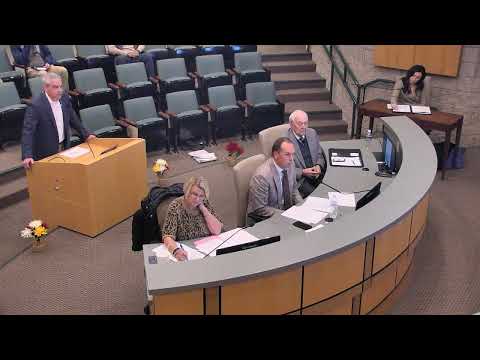
Anderson council approves first reading of special tax assessment to encourage historic rehabilitation
Summary
On first reading, Anderson City Council unanimously approved an ordinance to create a tiered special tax assessment that freezes pre‑rehabilitation assessed value for qualifying historic property renovations; tiers link freeze length to investment levels and require Board of Architectural Review certification.
Anderson City Council voted unanimously on first reading to create a special tax assessment intended to incentivize rehabilitation of historic properties by freezing the pre‑rehabilitation assessed value for a time period tied to the size of the investment.
Staff described a tiered approach: a five‑year freeze for rehabilitation investments under $2 million; a 10‑year freeze for investments of $2 million to under $5 million; and a 15‑year freeze for projects of $5 million or more. Eligibility thresholds require rehabilitation expenditures to be at least 50% of fair market value for owner‑occupied residential properties and to meet or exceed 100% of fair market value for income‑producing (commercial) properties; staff corrected a typographical ambiguity in the proposal during the meeting.
The proposed process relies heavily on the city’s Board of Architectural Review. A council resolution would start the process with a plan of work and a preliminary certification from the Board of Architectural Review that a proposed project meets historic‑district requirements; construction could begin after preliminary approval and final certification would follow inspection and verification of the completed work. Staff noted the Board would inform the applicant within 30 days on preliminary application status; if preliminary certification is granted by Aug. 1 of a tax year the special assessment would apply in that tax year, otherwise it would take effect the following tax year.
Staff and the presenter, Mike Burns of Verde Foreman, said the ordinance is meant to simplify and target incentives for historic renovation projects that may be too small or complex for larger incentive programs. A council member asked whether municipal adoption requires county approval; staff responded that a recent administrative‑law decision indicates the city may act on its own and that the city’s determination of assessed value can apply across taxing districts. Mayor Pro Tem Jeff Robbins confirmed the assessment would not preclude other incentives such as abandoned building credits and that incentives could be layered.
Mr. Stewart moved for approval of first reading and Dr. Thompson seconded; the council voted unanimously. The transcript records first‑reading approval but does not include a text of the final ordinance, specific project examples, nor a timeline for second reading or implementation steps beyond the certification process described.