Get Full Government Meeting Transcripts, Videos, & Alerts Forever!
Get email alerts on the Carport Ordinance topic
No spam. Unsubscribe anytime.
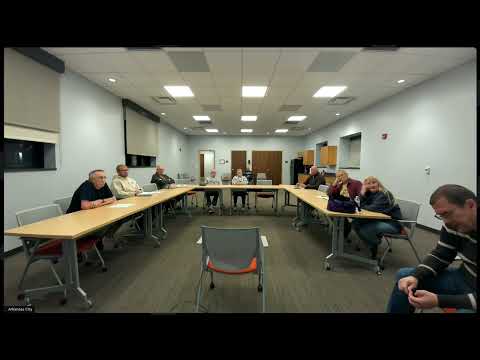
Arkansas City planning commission advances carport ordinance after public hearing on permits and enforcement
Summary
The Arkansas City Planning Commission recommended approval of an amendment to allow carports on single- and two-family lots without platted alleys, setting rules on siting and design. Residents pressed the commission on permitting and enforcement; staff agreed to broaden public outreach.
The Arkansas City Planning Commission on Tuesday recommended that the City Commission consider an ordinance allowing carports on single-family and two-family lots that do not have a platted alley. Planning staff described six conditions for eligibility, including that a carport be located on a paved driveway, remain open on three sides, be no wider than 18 feet and be at least 5 feet from the property line.
Planning staff (Speaker 2) told the commission, "So what this provision would do if it is enacted, it would be it would allow car reports for single family and 2 family homes, located on lots that do not have a platted alley associated with them." Staff clarified the intent is to permit true carports, not enclosed garages, and that materials should be compatible with the house.
The proposal drew sustained questions from residents and commissioners about permitting and enforcement. One participant (Speaker 3) said, "Many ordinances are passed. Very few are enforced," and asked what the city would do about existing carports that have been converted into enclosed rooms without permits. Planning staff replied that standard enforcement steps include identifying violations, sending notice letters, and pursuing compliance when work was done without a permit or not according to approved plans.
Commissioners and the public also discussed outreach. Staff listed the city website and Facebook as primary channels and agreed to prepare a flyer; a resident suggested placing a notice in the water bill, noting, "It goes to every house." Staff said they could include a flyer or newsletter insert and that routine licensing lists help notify property owners of requirements.
After closing the public hearing, the planning commission voted to recommend approval of the amendment and will forward the item to the City Commission for final action, following the usual scheduling process. Staff said the earliest the item would appear before the City Commission is at the next available meeting cycle (typically after a three-week interval).
The planning commission’s recommendation is advisory; any enforcement strategy or further permitting clarifications would be determined by city staff and the City Commission if the ordinance is adopted.