
Cheektowaga board narrows 2026 preliminary budget as members seek $3.7M in cuts to meet tax cap
Get AI-powered insights, summaries, and transcripts
Subscribe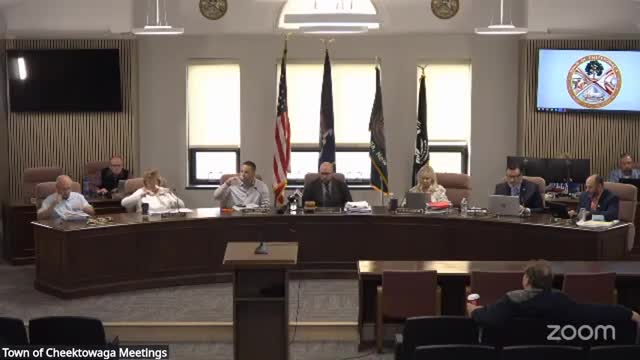
Summary
At a special meeting, the Town of Cheektowaga reviewed forecasts and proposed line‑by‑line reductions for the 2026 preliminary budget after finance staff said the town faces a levy increase well above the state tax cap; members agreed to deliver a revised preliminary budget and call a public hearing.
Cheektowaga’s Town Board spent a full meeting Wednesday reviewing the 2026 preliminary budget, debating revenue assumptions and proposed cuts after finance staff said the town faces a levy gap of roughly $3.7 million to remain under New York State’s tax cap.
Town Comptroller Dennis Dombrowski presented multi‑year trends showing countywide fund balances and revenues that have become less reliable and warned that, without major spending reductions or new revenues, the town will likely need to raise property taxes. "These are trends we are seeing within the county," Dombrowski said during the slide presentation of operating and fund‑balance data.
Finance staffer Brian Krause told the board the statutory tax‑cap calculation for Cheektowaga allows a 2.58% levy increase — about $1,898,206 — but the proposed levy increase in the current draft would total about $5,589,988. "To stay within the tax cap, you need to impact the levy by roughly $3.7 million," Krause said, citing the formal calculation and line‑item totals.
That arithmetic framed much of the discussion. Council members questioned revenue forecasts for sales tax, mortgage/transfer tax, fines and forfeitures, and recently established cannabis and hotel/bed taxes, saying some estimates were conservative and others were "fuzzy math" if used to balance the budget.
On court revenues, Dombrowski pointed to historical actuals and the methodology for annualizing partial‑year receipts; some members pushed to lower reliance on fines because collections and enforcement have changed under state law. Dombrowski said he used year‑to‑date monthly averages and annualized those values to form the projection.
The board spent most of the session proposing specific, line‑by‑line reductions. Among the larger suggestions: pause or delay vehicle and heavy equipment purchases, freeze or delay new staff hires (assistant director and junior engineer positions were singled out), reduce seasonal and part‑time payroll, trim software and printing budgets, and consider closing or consolidating one or two public pools to reduce summer operating costs. Dombrowski cautioned that some lines are constrained by contracts, legal obligations or prior commitments.
Members also discussed new or growing revenue streams. Dombrowski and staff said the town’s bed‑tax administration is moving forward; the board agreed to present a public hearing on the local law next week. Council members recommended conservative bed‑tax forecasts for 2026 (one suggested $500,000 as a mid‑range estimate) until the town has clearer remittance patterns from Erie County and hotel operators.
By the meeting’s end finance staff and the comptroller reported the board’s suggested changes and revenue adjustments had produced roughly $3.1 million of projected net improvement; the board still faces a remaining shortfall to meet the $3.7 million target. The board asked staff to prepare a resolution with the proposed modifications so the preliminary budget can be presented to residents in advance of the public hearing. "We can make changes after the hearing," the town attorney advised, but emphasized that the board should act promptly to publish the preliminary figures.
Next steps: staff will consolidate the agreed line‑item changes and circulate a draft resolution for the board to consider at the Tuesday meeting; the preliminary budget and a public‑hearing notice will be posted to allow resident review and comment. A formal vote on adoption of the preliminary budget was not taken at the session.
The board adjourned after setting the timetable and asking staff for updated line‑item tallies and any contract or legal limits that could affect final decisions.