Get Full Government Meeting Transcripts, Videos, & Alerts Forever!
Get email alerts on the Land Use Minor Partition topic
No spam. Unsubscribe anytime.
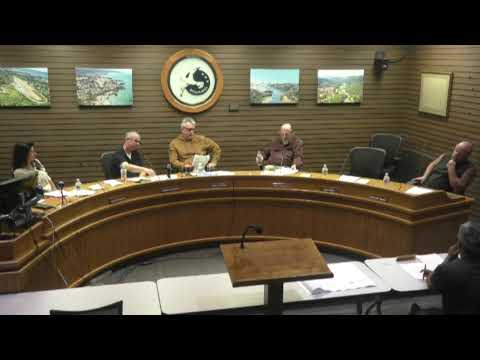
Brookings planning commission approves minor partition for 940 Weaver Lane
Summary
The Brookings Planning Commission approved a minor partition (file M3Dash2Dash25) to split a 1.87-acre parcel at 940 Weaver Lane into two lots; staff recommended approval and residents raised concerns about Deferred Improvement Assessments, potential costs (one resident cited $650,000) and drainage.
The Brookings Planning Commission voted to approve a minor partition for 940 Weaver Lane (file M3Dash2Dash25), allowing a 1.87-acre R‑1‑6 parcel to be split into two parcels and authorizing conditions of approval and a final order prepared by staff.
Planning staff presented the application and recommended approval, saying the proposed parcels each meet the 6,000-square-foot minimum and that access will be provided from Weaver Lane with a secondary access from Meadow Lane. Tony, planning staff, told the commission: "Staff believes all development requirements for land division and access are met, and recommends approval of M3Dash2Dash25 and has prepared the final order." The staff report explained the 50‑foot right‑of‑way will be platted as a private road until future partitioning triggers engineering and dedication to city standards.
The hearing included questions about Deferred Improvement Agreements (DIAs) and how future street improvements would be paid. Staff said DIAs remain on title, could be called in by the city council, could be released and paid for from the general fund, or could be addressed through a local improvement district. Staff noted an engineered, "shovel‑ready" design exists for improvements but that funding and timing are subject to future council action.
Several residents spoke in opposition or with concerns, citing potential costs and drainage. An unidentified resident said the estimate for improvements was "650,000 for that little section," and repeatedly urged commissioners to consider the financial burden on longtime, retired neighbors. Residents also raised local drainage and groundwater concerns and asked for additional public outreach; staff and the commission said those broader funding and neighborhood‑wide infrastructure questions are appropriate for city council discussion.
After closing public testimony and waiving written argument, commissioners moved to approve the partition application and then the final order. Roll call votes were recorded as aye and the motions carried. The commission then approved the Planning Commission minutes of July 1, 2025.
Planning staff announced an upcoming one‑day training/workshop in October (registration and fees noted), said there will be no November meeting, and previewed a planned unit development application for the Lundin property (a proposed subdivision of 47 units) for a future meeting.
Votes at a glance: - Motion: "Approve file M3Dash2Dash25, a request for minor partition to create 2 parcels at 940 Weaver Lane based on the findings and conclusions stated in the staff report and subject to the conditions of approval." Outcome: approved (motion carries). Recorded aye votes included Taylor Watwood; Commissioner Chapman; Commissioner Volkowitz; Commissioner Bond; Commissioner Woodmore (as stated in the roll call sequence). - Motion: "Approve the final order regarding file M3Dash2Dash25 based on the findings and conclusions stated in the staff report and subject to the conditions of approval." Outcome: approved (motion carries). Recorded aye votes included Commissioner Wilkiewicz; Commissioner Chapman; Commissioner Whitmore; Chair Watwood; Commissioner Bond (as stated in the roll call sequence).
What happens next: The approved partition becomes effective per the conditions in the final order; street improvements will be required only if future partitioning or development triggers the DIA or council action. Residents concerned about DIAs, costs and drainage were directed to bring broader funding or relief requests to city council, where the city has authority to call DIAs, release them, or fund improvements through other mechanisms.