Get Full Government Meeting Transcripts, Videos, & Alerts Forever!
Get email alerts on the Telecommunications Rezoning topic
No spam. Unsubscribe anytime.
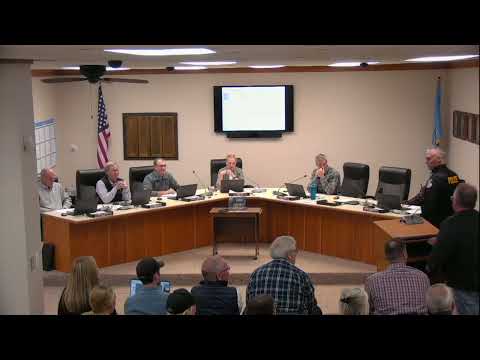
Brandon council hears heated testimony on proposed 90-foot cell tower at 108 Park Street; moves to executive session on legal risks
Summary
Elevated Towers asked the council to rezone 108 Park Street to allow a wireless monopole; residents and parents urged denial citing proximity to two schools, flood‑plain concerns and neighborhood impact, while the applicant and an RF engineer argued the site is needed to add capacity and redundancy; council deferred decision and voted to go into executive session on potential litigation.
The Brandon City Council held a public hearing on a request to rezone 108 Park Street to general business so Elevated Towers can seek a conditional use permit to build a wireless communications monopole. Craig Snyder of Elevated Towers said the company’s exhaustive site search left the firm with a single practical parcel and asked the council to reverse a prior decision that the request amounted to spot zoning.
The proposal—originally planned as a 120‑foot monopole and reduced to 90 feet to meet setback rules—would place the tower near a water‑tower site and within reach of two schools. Elevated Towers argued the tower is necessary not only for coverage but for capacity and redundancy, warning that a single carrier site creates a single point of failure for wireless service and public‑safety communications. Snyder told the council he has engaged Kutak Rock for legal counsel and that federal law restricts municipalities from denying towers for radio‑frequency concerns, saying: "The 1996 Telecommunications Act disallows, as a reason for not allowing zoning of towers, anything related to radio frequency radiation." (company presentation)
Residents and nearby parents urged the council to reject the rezoning for safety and planning reasons. Erin Taggart, who said she lives at 1900 West Tyler Circle, told the council the site is too close to a school and to homes, cited the parcel’s presence in a flood plain, and said a collapse or fire could block the only road used daily by students and families: "This isn't about opposing technology or better service. It's about common‑sense placement and good planning and safety," she said.
Megan Penning (1301 South Fernwood Avenue) pressed the council to consider Aspen Park—a roughly 53‑acre municipal parcel—as an alternate location, questioned whether Elevated Towers truly exhausted reasonable sites, and rejected the firm’s litigation framing: "As long as Aspen Park exists and is owned by the city, I don't believe they have a valid case," she said, adding the city attorney should confirm that position.
The applicant brought an independent radio‑frequency engineer, Garrett Lisiak of Owl Engineering, who described measurement methods and said monopoles at or above 100 feet typically register RF levels far below federal limits. "If it was 45 feet, I'd worry ... but at 100 I wouldn't worry about it," Lisiak said, summarizing his experience measuring towers and rooftop installations. He emphasized the distinction between coverage (signal reach) and capacity (how many users can be served simultaneously) and said capacity shortfalls—not just coverage gaps—drive the need for additional sites.
Planning and Zoning Commission member Brooke Snoham told the council she voted to recommend approval to the council and said the parcel’s current NRC zoning does not fit the site’s existing commercial use. City staff and the applicant said the rezone would not automatically allow construction: a separate conditional use permit (CUP) and technical RF and setback reviews would follow if the property is rezoned.
Council members debated procedural options—including approving first reading, denying, or tabling the matter—asked whether Aspen Park had been fully considered, and sought carrier propagation or usage data (some of which Elevated Towers said is proprietary and may require carrier cooperation). The applicant said they had provided coverage maps and a propagation study to the Planning & Zoning Commission, but that some site‑selection constraints (landowner refusals, archaeological view‑shed restrictions and setbacks) eliminated other candidate parcels.
Before taking a disposition on the rezoning, a council member moved that the council go into executive session to consult with legal counsel regarding potential litigation connected to the application; the motion passed on an "Aye" vote and the council recessed into executive session. No final rezoning vote was taken while the record shows the council sought legal advice.
The council's next procedural steps will depend on the outcome of the legal consultation; if the council votes to rezone after that consultation, the project would still require a CUP with site‑specific RF measurements and any required mitigation.
Authorities and legal context discussed at the hearing included a repeated reference to the Telecommunications Act of 1996 and federal environmental/historic processes (NEPA and state historic preservation review) that the applicant said had constrained some earlier candidate sites. Elevated Towers also noted engagement of Kutak Rock law firm to advise on zoning and appeal risk.