Get Full Government Meeting Transcripts, Videos, & Alerts Forever!
Get email alerts on the Finance Cfd topic
No spam. Unsubscribe anytime.
Big Bear Fire Authority directs staff to prepare proposed CFD amid budget shortfall debate
Summary
The Big Bear Fire Authority voted Aug. 12 to direct staff to prepare a proposed Community Facilities District (CFD) after months of budget delays and debate over long-term funding. The move sets a staff-driven draft to return to the board for approval, denial, or modification.
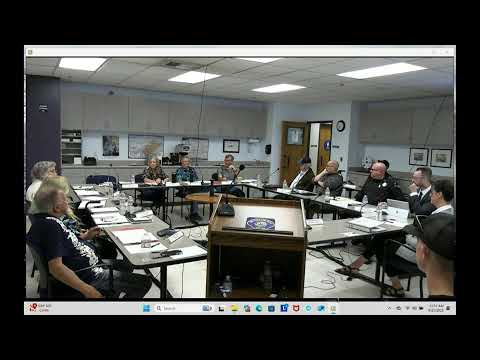
The Big Bear Fire Authority on Aug. 12 voted to direct staff to prepare a proposed Community Facilities District (CFD), a long-term funding mechanism discussed as a way to shore up future staffing and facilities needs while the authority continues to contend with current budget shortfalls.
The motion, made during a lengthy discussion of the ad hoc strategic planning committee’s work and public testimony, asks staff to assemble a draft CFD proposal using prior analyses and to return a tangible proposal for board consideration at the next meeting. Supporters said the CFD is a forward-looking tool; opponents said it could take years to produce revenue and cautioned against relying on it for immediate operating shortfalls.
Why it matters: Board members, firefighters and residents framed the vote against the background of a preliminary fiscal-year report showing revenues roughly 1% of budget and expenses about 3% over budget, and an ambulance-service deficit the finance officer described as about $1,000,000 for the year. Public speakers and several directors said the board’s indecision has damaged morale and risked service levels; others said the CFD is a supplemental, decades-long funding strategy, not an immediate fix.
Chief Wagner and staff described the CFD discussion as data-driven planning, noting the board could tailor a CFD to commercial property only, residential property, or both. Wagner cited counts provided to the board: 3,038 undeveloped properties in the CSD area and 73 undeveloped properties in Big Bear Lake. Wagner and staff recommended waiting for an upcoming Citygate standard-of-cover analysis (expected Nov–Dec) to inform exact staffing and facility needs before finalizing rates or boundaries, but the board elected to have staff produce a concrete draft now so the issue would not remain open-ended.
Public testimony was sharply critical of the board’s recent actions. Britannia Huether told the board it had “broken this department,” accusing leadership of allowing managerial decisions that drove the organization into financial crisis and saying morale was “toxic.” Patrice Duncan and other commenters urged the board to pass the 2025–26 budget and to explain large historical differences in contribution amounts between JPA parties; Duncan cited previous contribution differences of about $1 million to $2 million in prior budgets.
Board members split on timing and scope. Several directors cautioned that CFDs typically take years to produce significant revenue, that rates can be difficult to change later, and that CFDs should be crafted to avoid being used as a recurring payroll funding source. Supporters argued a commercial-only CFD could capture revenue from hotels and large developments without materially harming residential sales, and recommended separating CFD receipts into a distinct fund or reserve.
The motion before the board asked staff to "put together a proposed CFD based on all the work that has already been done and bring it back to us for either approval or denial or tweaks to it," and requested staff use prior service-level studies where helpful. After public comment and additional discussion, the motion passed on a roll-call vote.
Next steps: Staff will prepare a draft proposed CFD, incorporating prior studies and the upcoming standard-of-cover data when available, and return a proposal to the board for consideration. The board also discussed preliminary policy steps—such as deciding whether to pursue commercial-only or combined CFDs—and asked staff to identify the legal and financial steps required to implement a CFD should the board later choose to adopt one.
The board’s decision to ask staff for a draft sets a tangible next step but does not itself adopt a CFD or set rates; any final CFD adoption will require later board action and public notice.