Get Full Government Meeting Transcripts, Videos, & Alerts Forever!
Get email alerts on the Land Use topic
No spam. Unsubscribe anytime.
Council debates whether amended Unified Development Ordinance before them matches first-reading text; attorney says amendments between readings are proper
Summary
Councilmembers questioned whether the Unified Development Ordinance presented for second reading matched the first-reading version and whether the public had adequate notice; the city attorney advised amendments between first and second reading are permissible and suggested adopting the itemized amendment as an exhibit to clarify the record.
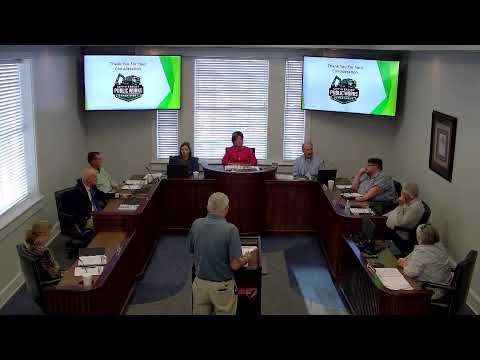
At the City of Easley work session, councilmembers pressed staff about which version of the Unified Development Ordinance (UDO) would be before the council at second reading. One councilmember said, "The document that we received is not what passed at first reading," adding that the packet contained what the planning commission passed rather than the version the council previously passed at first reading.
City staff responded that planning-commission recommendations had been incorporated and that the updated document and an itemized list of amendments were provided to council via email and posted to the website in the hours before the meeting. The councilmember asked whether the public had adequate notice; staff said the agenda was posted 24 hours in advance, and the updated UDO was placed on the website shortly before the meeting.
The city attorney addressed the legal question directly: "So Corey is correct. He did consult with me, and it is proper to amend an ordinance between first and second reading," the attorney said. The attorney recommended the council adopt the ordinance as amended with an itemized amendment marked as an exhibit so the record clearly reflects every change between first and second reading.
Councilmembers raised specific concerns about particular changes — for example, accessory structure height and the removal of accessory buildings — and some members said they had not had time to review the full set of amended pages. Staff said a page-by-page table of changes had been prepared and was included in the packet email. The attorney said council retains legislative authority and could accept, reject or further amend planning-commission recommendations before adopting the ordinance.
No final vote on the UDO was recorded in the work-session transcript; staff and the attorney left the option for council to make motions before second reading and to memorialize the precise amended form in the record.