Get Full Government Meeting Transcripts, Videos, & Alerts Forever!
Get email alerts on the Mobile Vending topic
No spam. Unsubscribe anytime.
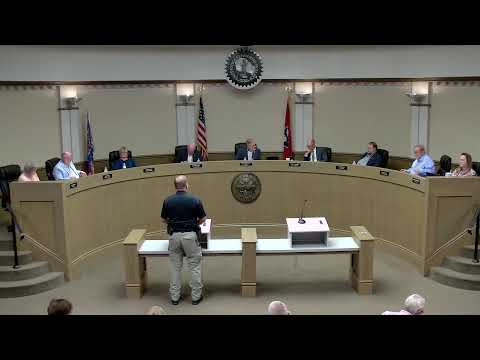
East Ridge council debates 200‑foot food‑truck buffer, asks attorney to draft revisions
Summary
Council discussed a revised mobile food‑vending ordinance that would set a 200‑foot separation from existing eateries, create overlay districts (including the stadium), and limit single‑location permits; staff and council asked the city attorney to draft amendments addressing stadium events, on‑site restaurant promotions and grandfathering.
The East Ridge City Council spent more than an hour on Oct. 23 refining a proposed mobile food‑vending ordinance that would create a 200‑foot minimum distance between mobile vendors and brick‑and‑mortar eateries and add new overlay districts, including an option to cover the stadium and its parking.
At a staff presentation, Mister Veil summarized Revision 2, saying it “establishes a 200 foot minimum distance from existing eatery establishments and mobile food vendor…measured from the property line” and that the proposal also creates an overlay district on the east end of Ringgold Road where distance rules would not apply. Council members repeatedly pressed how the rule would work for special‑event vendors and for restaurants that want to put a vendor on their own property.
Several council members said they worried the 200‑foot rule could block on‑site promotions or penalize small seasonal vendors such as snow‑cone or ice‑cream trucks. “If it’s my property and I allow it, I don’t have a problem with it,” one council member said, asking whether restaurants could host trucks on their own lots. Staff replied that special‑event permits would still be allowed but that the ordinance’s distance standard would apply to routine vending.
Council members also discussed the stadium, where food trucks operate inside gates for most events but sometimes appear outside the fencing on high‑attendance days. Staff and council agreed the stadium should be added to an overlay district so seasonal or event vendors could be covered by an annual permit rather than a separate one‑day permit for each game.
City Attorney Litchford told the council he would draft the ordinance with the requested amendments and present the revised language at the next meeting. “I’ll work on this and get it,” he said. Council suggested the revised draft address: overlay boundaries (including the stadium and related parking), special‑event carve‑outs, grandfathering of existing vendors, enforcement mechanics, and whether canteen/sold‑off‑site trucks should be treated differently from onsite restaurant promotions.
No vote was taken; the council asked staff to return with a consolidated ordinance for a formal first reading.