Get Full Government Meeting Transcripts, Videos, & Alerts Forever!
Get email alerts on the Arts Measurement topic
No spam. Unsubscribe anytime.
Shared measurement pilot shows cultural programs boost empathy, creative confidence and job skills, panelists say
Summary
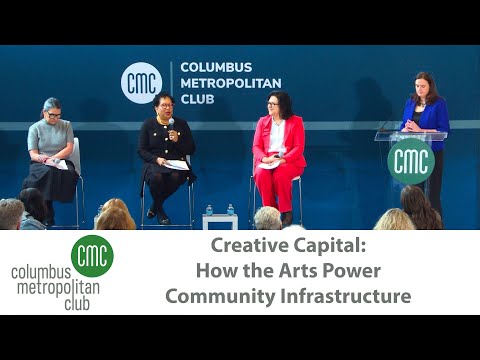
At a Columbus Metropolitan Club forum, panelists presented early results from a shared-measurement pilot showing self-reported gains in empathy, creative confidence and job-readiness skills and discussed using those results to strengthen funding and outreach to underserved neighborhoods.
Columbus — Arts leaders at a Columbus Metropolitan Club forum on creative capital on (date not specified) said a year-long pilot using shared, scientifically validated survey tools produced measurable human outcomes that organizations can use to make the case for sustained funding and cross-sector partnership.
Angela Malacca, who organized the Collaborative Arts Impact pilot, said the initiative grew out of pandemic-era advocacy and a desire to move discussion of arts impact beyond ticket sales to outcomes such as reduced loneliness and improved workforce readiness. "This was a selfish endeavor," Malacca said, explaining she wanted tools that would let arts organizations show, with data, how their work affects mental health, belonging and job skills.
The pilot — which Malacca and moderator Sherry Chaney Jones said included about 20 arts organizations and technical partners such as Measurement Resources and student interns from Miami University — reported several headline results. Sherry Chaney Jones summarized participant responses as including a 24% increase in empathy, 65% reporting gains in 21st-century job-readiness skills (adaptability, teamwork), a 50% rise in creative confidence, and an 84 net promoter score for participating cultural institutions. Malacca cited institution-level findings from the Wexner Center showing 77% of attendees reported reduced stress, 89% said they did not feel alone after events and 85% left thinking differently.
Panelists said those human-outcome metrics can strengthen fundraising pitches to corporate and public funders and help arts organizations partner with health, education and workforce entities. Priscilla R. Tyson, a former Columbus City Council member and namesake of the Tyson Cultural Arts Center, said outcome data also supports economic-development arguments, noting (as stated at the forum) that roughly "$412,000,000" flows into the local economy tied to arts and creative industries.
Kimberly Goodman, executive director of the McConnell Arts Center, described practical changes the data enabled at her organization: by asking a few short post-event questions — for example, whether an attendee "felt less stressed" or "did not feel alone" — staff could document wellness and social connection outcomes and justify programming that might not sell out but nonetheless transform participants' lives. "They save lives," Goodman said of the programs she has seen produce measurable effects.
Audience members asked how to scale the work and reach residents in underserved ZIP codes. Panelists acknowledged the pilot is an early, proof-of-concept effort that requires slow, steady adoption, board education and intentional outreach: "We have to go to them," Goodman said of communities that cannot travel to central venues. Panelists recommended starting small with one to five validated questions, using incentives for response, and aggregating results to tell both organization-level and sector-wide stories.
Speakers also cautioned that adoption requires governance and consistent language: shared measurement enables "apples-to-apples" comparisons, but funders and boards must accept different questions than the traditional economic-output measures. Malacca urged arts leaders to frame asks as investments with a measurable "return on art," arguing that outcome data lets arts organizations demonstrate contributions to mental wellness, schooling outcomes and workforce preparedness.
The forum closed with host Sofia Pfiffner encouraging attendees to share the findings with funders and community partners. The series will continue at the Columbus Metropolitan Club; organizers encouraged interested parties to pursue shared-measurement partnerships and to consult the pilot's materials for sample survey items and governance guidance.
Note: Several numeric details and one fiscal appropriation figure were stated on stage as part of the oral presentation and are recorded above as they were presented at the forum.