Get Full Government Meeting Transcripts, Videos, & Alerts Forever!
Get email alerts on the HUD NOFO topic
No spam. Unsubscribe anytime.
Council hears that HUD NOFO changes could cut Bangor’s expected homelessness award from $1.5M to about $500K
Summary
Staff told the committee that a new Continuum of Care NOFO cap could reduce Bangor’s permanent supportive housing award dramatically; the committee discussed applying for the support‑services portion while noting legal challenges and uncertainty over final allocations.
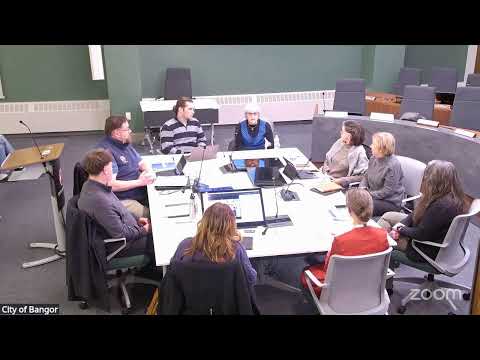
City staff advised the Governor Outreach Committee that changes to the U.S. Department of Housing and Urban Development’s FY2025 Continuum of Care (CoC) and youth homelessness NOFO could sharply reduce the amount Bangor might receive for permanent supportive housing.
"When I wrote this order, we were going to — as I mentioned, the Maine COC is experiencing a significant change in its funding process," Speaker 4 said, describing a newly announced 30% cap on permanent supportive housing within the NOFO that applies to Maine’s CoC process. "So what we would get for $1,500,000 will be applying for $500,000. That's a lot to take in right now."
Speaker 4 also told the committee the state of Maine has joined a lawsuit challenging the federal allocation approach. Staff proposed applying to the CoC for permanent supportive housing at the lower expected amount and separately pursuing the NOFO’s "support services only" bucket (street outreach) through the CoC process; committee members asked clarifying questions about how the cuts would affect local rental‑assistance programs and the city’s broader homelessness strategy.
The transcript records a motion to authorize application but does not include an explicit recorded final vote outcome during the meeting minutes. Councilors asked staff to keep the committee informed and to return with final award amounts and contingency plans for filling funding gaps.
Why it matters: The expected reduction in permanent supportive housing funding could limit rental assistance and long‑term supportive housing projects the city had planned, forcing staff and partners to seek alternative funding or scale programs back.
What’s next: Staff said they will submit applications as possible, monitor Maine COC and HUD outcomes, and report back to the committee with updated award projections and proposed gap‑filling strategies.