Get Full Government Meeting Transcripts, Videos, & Alerts Forever!
Get email alerts on the Restraint And Seclusion Policy topic
No spam. Unsubscribe anytime.
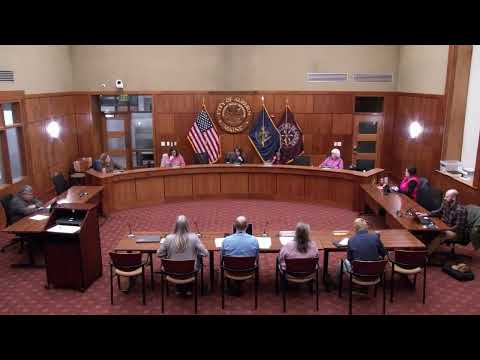
Auburn School Committee approves first readings of restraint and seclusion policy to align with changed state law
Summary
The Auburn School Committee approved first readings of Policy AUBJKAA and Procedure AUBJKAA-R to update district rules on physical restraint and seclusion after recent state-law changes; staff said trained safety-care teams make intervention decisions and annual reports are filed with the state.
The Auburn School Committee on Monday approved first readings of Policy AUBJKAA (use of physical restraint and seclusion) and its accompanying procedure, AUBJKAA-R, to align district policy with recent changes in state law.
Committee members moved and seconded both first readings and the chair declared both motions carried. The committee did not take a final vote; both items were advanced as first readings and will return for a second reading.
Why it matters: the policy governs when and how staff may use physical interventions with students. Laura Shaw, the district—s director of special services, told the committee the policy language was updated "because the law changed" and to correlate "with the MSA policy language" so the district remains in compliance.
What staff said: the district—s director of student services described how decisions about physical interventions are made. "There is usually a safety care team that's assembled that sort of assesses the situation," the director said, adding that "all members of the team have been trained in all of the de-escalation strategies that lead up to physical interventions" and that each safety care team has a trained lead who determines when a student presents "imminent danger of bodily injury." The director emphasized that interventions are documented and treated as restraints under district procedures.
Changes called out: Committee members highlighted several specific items during discussion. One member asked who determines that less-intrusive interventions have failed; staff said that determination is made by the trained safety care team and its lead. Members also asked about notification timelines for administrators, and staff said administrators are informed within legally required timeframes and will be more directly involved if a physical intervention reaches certain time limits.
Legal basis and documentation: staff said the updates reflect changes to state law; no statute number was cited during the meeting. The director said annual restraint-and-seclusion reports are prepared each July and reported to the state; those reports are retained and staff said historical data (several years) is available to committee members on request.
Edits and next steps: committee members requested minor pronoun edits in the procedure language. Staff committed to making those wording changes prior to the second reading. Both the policy and the procedure were advanced after motions and carried at first reading; the committee will consider final approval at a future meeting.
What wasn't decided: the meeting did not include a final adoption vote for AUBJKAA or AUBJKAA-R. The committee also did not change reporting requirements; staff reiterated that documentation and state reporting remain in place.
Closing: the chair moved the meeting on to other agenda items after the votes and later moved to enter executive session for labor negotiations.