Get Full Government Meeting Transcripts, Videos, & Alerts Forever!
Get email alerts on the State Development Law topic
No spam. Unsubscribe anytime.
Plan Commission hears overview of state development law; adopts 2026 meeting schedule
Summary
Planning staff provided a long refresher on Texas zoning and subdivision law, including Local Government Code requirements and Senate Bill 15 implications; commissioners also adopted the proposed 2026 meeting schedule.
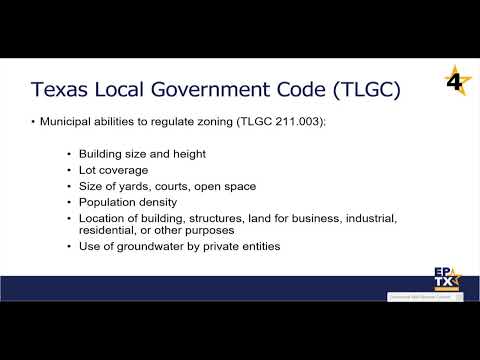
Kevin Smith of Planning & Inspections delivered an expanded refresher on the legal framework that governs development in Texas and the role municipalities play in zoning and subdivisions.
Smith explained that cities must operate within state law and cited Local Government Code chapters governing zoning and subdivisions. He said municipalities set minimum requirements for development but cannot conflict with state law, and he described concepts including vesting, legal nonconforming status, the need for a rational nexus when imposing conditions, and that plats generally must be acted upon within 30 days unless an extension is requested and approved. Smith also summarized state-level changes such as provisions commonly associated with Senate Bill 15 that enable smaller-lot development under defined circumstances (minimum acreage and other eligibility limits).
Commissioners asked questions about how the state's changes apply locally, whether previously sold or subdivided properties qualify, and how local authority interacts with state agencies such as TxDOT. Smith and other staff stressed the city coordinates with state agencies but cannot supersede state jurisdiction on state or federal projects. The presentation included practical points about enforceability of plat lines at permitting and about the city's role when projects are in extraterritorial jurisdiction.
Separately under other business the commission considered and approved the proposed 2026 meeting schedule (biweekly Thursday meetings at 1:30 p.m., with an annual business meeting Jan. 15 and regular meetings starting Jan. 29). The commission approved the schedule by motion and voice vote with no recorded dissents in the transcript.