Get Full Government Meeting Transcripts, Videos, & Alerts Forever!
Get email alerts on the Land Use topic
No spam. Unsubscribe anytime.
El Paso updates zoning and land-use rules to comply with Texas Senate bills on small lots and mixed-use conversions
Summary
City planning staff presented and council adopted municipal code changes to align with Senate Bill 15 and Senate Bill 840, adjusting definitions, allowing higher heights for qualifying apartment/mixed-use projects and limiting local requirements on conversions; staff mapped broadly eligible areas and said implementation will be case- and design-dependent.
El Paso's planning department told the City Council on Nov. 18 that it has amended multiple sections of the municipal code to comply with two recently effective state laws affecting housing and mixed-use conversions.
Kevin Smith of Planning & Inspections said the changes reconcile local definitions with state law (apartment/multifamily now defined as three or more units and a new mixed-use residential definition requiring at least 65% residential floor area). To comply with SB 840 and SB 15, staff will allow higher building heights for qualifying apartment or mixed-use residential projects (raising the ceiling in many districts from 35 to 45 feet), set a by-right density ceiling for qualifying projects, and limit local requirements the state preempts for qualifying conversions (including restrictions on traffic-impact studies, additional parking beyond one space per unit, utility upgrades and impact fees in certain cases).
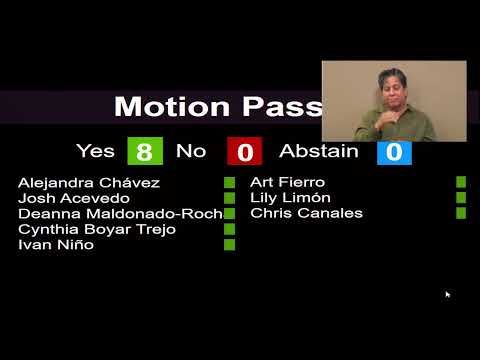
Smith emphasized that eligibility is narrow: conversions must be from office, retail or warehouse uses older than five years and must meet the 65% residential threshold; small-lot rules apply only to parcels that meet state size and platting criteria (five-acre minimum and other technical requirements). Staff presented a map showing tracts where the small-lot standard could theoretically apply; they said central city neighborhoods are often ineligible because they are already platted in smaller lots. City Planning Commission unanimously recommended approval; council adopted the ordinances on first reading and then adopted related ordinances to align titles 15, 19, 20 and 21.
Council members asked whether failing to adopt would expose the city to lawsuits and whether the changes mean developers may pursue by-right projects in more places. Legal staff said failing to update the code would raise legal risk; Smith said the standards set minimum state ceilings that enable, but do not require, developers to use the new options.
What’s next: the city will monitor incoming applications and refine implementation guidance; staff said they can produce counts of eligible lots on request.