Get Full Government Meeting Transcripts, Videos, & Alerts Forever!
Get email alerts on the Signs topic
No spam. Unsubscribe anytime.
Commission to revisit sign-code changes after staff seeks ODOT guidance and stakeholder input
Summary
Jenks staff proposed changes to the Unified Development Ordinance's sign standards (Article 7) including aligning billboard rules with ODOT, incentivizing monument signs over pole signs near Highway 75, and clarifying temporary and projection-sign rules; commissioners asked for the ODOT language and continued the item to Dec. 4.
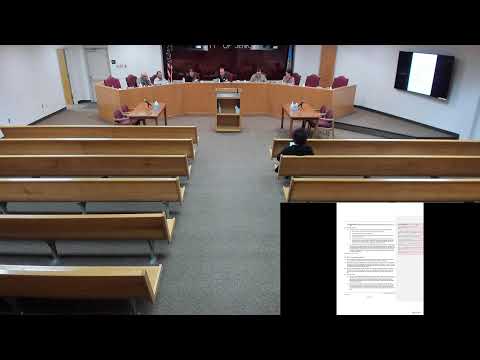
City planner Missus Hilton presented proposed amendments to Articles 3 and 7 of the Jenks Unified Development Ordinance on Nov. 6, focusing much of the discussion on sign standards and how the city should regulate billboards, monument signs, pole signs and temporary signage.
Hilton said staff would like to align the city’s billboard-spacing language with the Oklahoma Department of Transportation (ODOT) brochure and standards rather than the existing local "within 300 feet" phrasing. She also proposed incentives to encourage monument-style signage along Highway 75 — for example, allowing single-tenant monument signs up to 100 square feet within 500 feet of federal highways where current code treats many monument signs as much smaller (15 square feet cited as a typical existing size).
Hilton framed the change as a way to favor more tasteful, landscaped monument signs instead of tall pole signs typical of highway convenience stores. "The key word is monument sign rather than pole sign," she said while describing incentives staff is considering for Jenks Landing and other Highway 75-fronting properties.
Commissioners pressed staff on the practical effects of removing the 300-foot local limit and replacing it with ODOT language, asking Hilton to provide the specific ODOT spacing and measurement rules for review. They also discussed nonconforming signs that have been erected without permits and how enforcement is typically reactive rather than proactive in Jenks.
Other proposed changes included clarifying projecting (blade) sign measurements for pedestrian versus vehicle contexts, whether digital monument signs should be permitted in residential zones, allowing roof signs by Planning Commission approval or as part of an approved PUD, and removing certain temporary-sign sequencing limits. Staff said some items (Article 3 topics) would be the subject of a January roundtable with engineers, landscape architects and builders to identify pain points in applying new landscaping and impervious-coverage standards.
After discussion commissioners agreed to split the amendments into separate agenda items (Article 3 and Article 7) and continue consideration of the sign-code changes to Dec. 4 so staff can circulate the ODOT standards and refine the draft language.
Next step: Staff will email commissioners the ODOT billboard specifications and bring a revised, separated proposal back at the Dec. 4 meeting.