Get Full Government Meeting Transcripts, Videos, & Alerts Forever!
Get email alerts on the Budget Prioritization topic
No spam. Unsubscribe anytime.
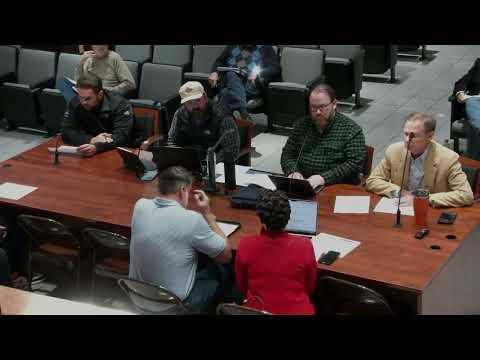
Jackson City budget committee previews tiered rubric to rank spending priorities
Summary
City staff and committee members tested a draft scoring rubric that ranks budget requests into tiers (must fund, essential, enhancements), discussed scoring criteria and examples, and set a timeline to finalize the tool for training and use in the next budget cycle; no formal vote was held at the session.
Jackson City budget committee members spent their meeting reviewing a draft prioritization rubric intended to help the city rank and fund competing budget requests. Staff presented a scoring worksheet and walked the committee through tier definitions, multiple scoring criteria and plans to normalize department-submitted scores before the next budget season.
The rubric divides requests into three tiers. "Tier A are must fund services," Speaker 2 said, citing legally mandated or core services such as public safety, finance, utilities and core infrastructure. Tier B covers essential, expected services for a modern city of Jackson City's size (planning, engineering, parks operations); Tier C covers discretionary enhancements such as cultural or beautification projects.
Committee members reviewed the rubric's criteria, which include legal mandate (0–3), public safety/risk (0–3), infrastructure preservation, community demand and equity, economic and fiscal impact, leverage/match, timing and urgency, and asset life. Speaker 2 described a system where department heads would score their own requests, Nathan's office would help normalize those submissions, and any edits by the budget committee or mayor would be tracked so reviewers could see why a score changed.
Speakers discussed safeguards to reduce bias. Several advocated blind scoring by departments or multiple reviewers and averaging results to reduce the influence of inside perspectives. "You can average it all out," Speaker 3 said, describing how blind input could produce objective starting numbers for later discussion.
Committee members also cautioned against misusing the tool as a mechanical veto. Speaker 1 warned that adopting the rubric should not make it "the default of the reason we don't fund things," and Speaker 2 reiterated the intent: "Ultimately ... this doesn't make the decision for you. This helps you make the decision." The group agreed the rubric should be a decision-support tool, not an automated cutoff.
The committee set implementation steps: revise the worksheet based on feedback, finalize it in a meeting later this month and conduct training for department heads in January. Speaker 2 said he hoped the committee would "finalize this and get a vote on it for implementation," but the transcript records no formal vote during this session. The budget committee also plans to present an informational session to the full council ahead of formal budget deliberations.
Why it matters: the rubric is designed to make spending decisions more transparent and data-driven in a constrained fiscal environment by aligning funding with legal obligations, public safety risk and measurable fiscal impacts. The committee intends to rescore items periodically so priorities reflect changing conditions and available revenue.