Get Full Government Meeting Transcripts, Videos, & Alerts Forever!
Get email alerts on the CDBG topic
No spam. Unsubscribe anytime.
Council moves CDBG consolidated plan with 15% for public services after debate over sidewalks vs homeless aid
Summary
Council advanced the city's HUD consolidated plan (first‑year CDBG ~$330,000; five‑year estimate ~$1.65M) after debate; council preserved up to 15% for public services and directed staff to explore using that funding for meals and other homeless services while keeping the sidewalk/public facilities focus for the majority of funds.
City planners presented Gallatin's first consolidated Community Development Block Grant (CDBG) plan and citizen participation plan on Oct. 28, explaining HUD rules, program eligible activities and the city's proposed priorities. Staff said the city expects roughly $330,000 in year‑one entitlement funding and about $1.653 million over five years assuming steady federal appropriations.
Planners recommended leveraging most of the funds for public facilities—sidewalks and infrastructure projects targeted to low‑to‑moderate income census tracts (areas around Guild, Union Elementary and Venus Stewart were highlighted). HUD rules limit public services to 15% of any program year's allocation; staff said that ~15% could be used for meals, outreach and similar services pending program setup and grant administration.
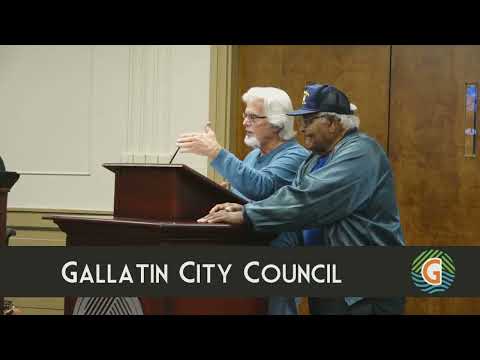
Public commenters and several councilmembers urged prioritizing immediate homeless services (meals, shelters or acquisition of property to create a shelter) rather than sidewalks, arguing local needs surfaced in public hearings and that churches and nonprofits are already stretched. Staff cautioned that larger investments—such as acquiring or operating a shelter—would require ongoing funding beyond the CDBG allocation and careful program design to meet HUD rules, procurement and reporting requirements.
After discussion, council agreed to forward the consolidated plan and citizen participation plan to the Nov. 4 council meeting with the 15% public‑services line available to fund meals and selected services for people experiencing homelessness while the majority of the funding remains targeted to public facilities. Staff committed to working with the region's continuum of care and local nonprofits to design an eligible grant program and to report back with details.
Key figures and constraints offered by staff: year‑one entitlement ~$330,000; a five‑year projection of ~$1.653M; HUD rule that only up to 15% of annual CDBG funding (plus program income) may be used for public services.