Get Full Government Meeting Transcripts, Videos, & Alerts Forever!
Get email alerts on the Stormwater Veterans Home topic
No spam. Unsubscribe anytime.
Council weighs condemnation to use ARPA funds for stormwater fix at veterans' home; condemnation option tabled
Summary
Council debated a plan to expand a detention pond and realign Woods Ferry Road to fix flooding at the American Legion veterans residence; Sumner County offered $500,000 in ARPA funds, the city discussed a $133,000 appraisal for needed land and voted to remove condemnation from the table while scheduling follow‑up.
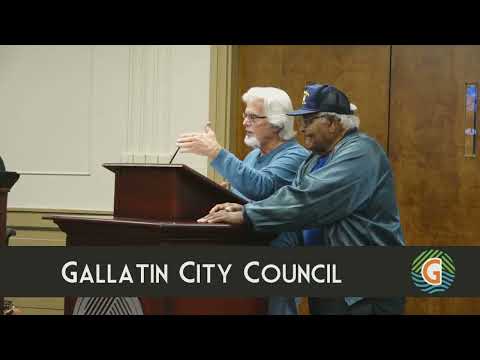
Council and staff spent substantial time on Oct. 28 discussing a proposed stormwater project near the American Legion Post 17 veterans residence that would enlarge a city‑owned detention pond and correct a skewed Woods Ferry–South Water intersection.
City engineering staff (presented as McTurtle) said the problem has been discussed for at least a decade and showed a preferred design that would remove a short segment of Woods Ferry Road, extend Hale Avenue and expand a city pond to capture stormwater before it reaches the veterans' residence. The reconstruction would also correct a dangerous, skewed intersection. Sumner County has offered $500,000 of ARPA funding toward what staff estimated to be a project of a little over $1.0 million.
A critical element of the plan is acquiring roughly 0.3 acres on the south edge of property owned by Liberty Baptist Church to provide a public right‑of‑way and space for the stormwater piping and pond expansion; staff cited an appraisal figure of about $133,000 for the necessary right‑of‑way and easements. Some public commenters and councilmembers said earlier, privately led plans (a 10‑year‑old concept that relied on an easement or donation) could have fixed the problem without requiring new public right‑of‑way or a road. Church and American Legion representatives said they prefer a pond/ditch‑based fix, not a new road through church property.
Legal and staff members repeatedly noted a threshold issue: to spend public funds on private property the city must identify a clear public purpose. That public‑purpose analysis was central to the discussion because the proposed solution would require acquisition (easement or right‑of‑way) through privately owned land. Council considered condemnation as one option and discussed the need to avoid improper use of ARPA funds if the city could not demonstrate public purpose.
Council members expressed urgency because the ARPA funds are time‑limited and the county's obligation depends on contract execution; staff said the ARPA funding was effectively obligated by prior steps but must be expended by late 2026 under the county's schedule. After extended discussion of alternatives, engineering options (curb and gutter, small pond on the north side of the legion property, deeper existing ponds) and legal constraints, the council agreed to schedule a special called work session (Nov. 18) to continue the matter and passed a motion to remove condemnation from the table for this project (motion passed by voice vote). Staff were directed to pursue clarifications from legal counsel about whether donated easements or adjustments to the project still meet the public‑purpose test and whether the ARPA funds can be used if property is donated or an easement is obtained.
The practical consequence: the council left the project alive but asked for more legal clarity and potential alternatives before committing to condemnation or returning county funds. The council emphasized urgency to determine use of ARPA funding and to develop a solution that protects the veterans' residence from continuing interior and crawl‑space water intrusion.
Key figures cited in the discussion: $500,000 (Sumner County ARPA offer), ~$1,000,000 (rough city estimate of project cost), $133,000 (appraisal for ~0.3‑acre right‑of‑way/easement).