Get Full Government Meeting Transcripts, Videos, & Alerts Forever!
Get email alerts on the Fire Station topic
No spam. Unsubscribe anytime.
Laguna Beach council narrows Fire Station 1 options as consultants flag seismic, cost trade‑offs
Summary
Consultants told the council the proposed village‑entrance site north of City Hall scored highest among alternatives for Fire Station 1, and that integrating an Emergency Operations Center (EOC) is functionally feasible but would add roughly $6 million; councilors asked staff to study three narrowed site options including the city‑owned former OCTA bus stop and a potential trade with the water district.
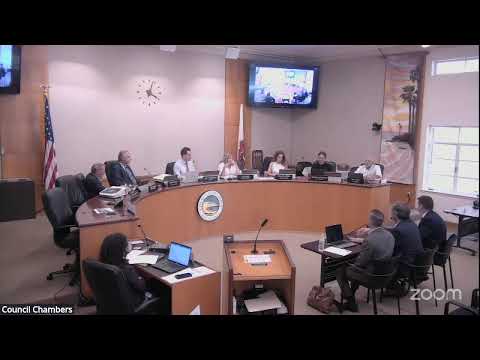
Consultants returned to the Laguna Beach City Council with follow‑up analysis on Fire Station 1, telling the council the site north of City Hall (the ‘village entrance’) scored highest in a multi‑criteria evaluation that weighed cost, response time, zoning and operational constraints.
Dustin Alamo of Griffin Structures summarized the analysis, saying the proposed site “scored the highest among all the sites in question” when compared with other city‑owned parcels such as the Christmas tree lot and the tennis‑court/festival lease parcel as well as private‑sector alternatives that raised acquisition and zoning hurdles. He said the existing downtown station is undersized and constrained for long‑term operations.
The consultants examined whether the city could collocate Fire Station 1 with police and an Emergency Operations Center (EOC). Alamo said a shared complex is operationally feasible but a “significant lift,” estimating a conceptual cost range of roughly $90 million to $121 million for a major consolidated campus. By contrast, integrating an EOC directly into a new Fire Station 1 at the proposed village‑entrance site would add about $6 million to the standalone station estimate; consultants presented a ballpark total of about $30–33 million for Fire Station 1 with fire administration and an incorporated EOC in a single facility.
Council members agreed replacing or relocating the existing seismically vulnerable stations is a near‑term priority. Mayor Ranaghi said she did not favor siting the station at the village entrance if viable alternatives exist; she and other council members asked staff for further study of a small group of options narrowed during the meeting. Council direction asked staff to return with additional analysis on the village‑entrance option, the city‑owned former OCTA bus‑stop parcel and the water‑district/corporate‑yard trade scenario as potential alternatives.
Fire Chief King (participating in the consultant review) was cited by consultants as indicating that the village‑entrance site would improve operational access compared with the constrained intersection at the current station. Councilors repeatedly framed seismic safety as the overriding public‑safety driver for urgent station replacement: one council member said the city’s fire facilities are “seismically unsound” and emphasized ensuring four functioning, seismically sound stations.
Next steps: staff was directed to return with focused feasibility details on the three sites the council identified and to include parking and turnaround solutions, standards‑of‑coverage implications, and refined cost estimates before any agendized decision. No formal motion or vote was taken during the study session.